WhatsApp works for financial advisors in India when it carries the routine of an advisory relationship: SIP reminders before the debit date, KYC and document checklists, portfolio summaries, review bookings and quick answers. It works against you when it carries stock tips, return promises or unrecorded advice. Mutual fund distributors and SEBI-registered investment advisers follow different rules, so what you send depends on which one you are.
Most of your clients already message you on WhatsApp, usually on your personal number. This guide is for individual advisers and small advisory firms who want to run that properly: which messages fit, which rules apply, what it costs, and how to set it up on the official WhatsApp Business Platform. Insurance agents have a separate guide, WhatsApp for insurance agents, because IRDAI’s rules differ. Banks and NBFCs should see our banking and finance page.
Using ChatMitra? You can send SIP and review reminders as approved templates with each client’s name, scheme and date filled in, share one official number with your team, and reply from a shared inbox on web or the Android app. Starter is free; you pay Meta’s rates at cost plus ₹0.20 per conversation. Jump to setting it up in ChatMitra.
Distributor or adviser? It decides what you can send
India separates selling mutual funds from advising on them. The same WhatsApp message can be fine from one and a problem from the other.
| Mutual fund distributor (MFD) | SEBI-registered investment adviser (IA) | |
|---|---|---|
| Registered with | AMFI, with an ARN | SEBI |
| Paid by | Commission from fund houses, which you must disclose | Fees from the client: up to ₹1,51,000 per family a year in the fixed-fee mode, or up to 2.5% of assets under advice |
| Advice | Only advice “incidental” to distribution, without a separate fee | Advice is the service, after risk profiling and a suitability check |
| What you may call yourself | ”AMFI-registered Mutual Fund Distributor”, never adviser, wealth manager or consultant | Investment Adviser, with your SEBI registration number |
| WhatsApp messages that fit best | SIP reminders, transaction help, statements, scheme information with the required disclosures | Review bookings, advice follow-ups, recorded advice conversations, fee reminders |
Sources: AMFI’s master circular for MFDs, January 2026 (AMFI); SEBI’s master circular for investment advisers, 6 February 2026 (SEBI).
The naming rule matters on WhatsApp. AMFI’s circular says distributors “shall not use terms such as Adviser / Advisor / Financial Adviser/ Investment Adviser/ Wealth Adviser/Wealth Manager/Wealth Managers, Consultant/s”. That includes your WhatsApp display name, profile description and message signatures. A distributor’s profile should read something like “Priya Shah, AMFI-registered Mutual Fund Distributor, ARN-XXXXX”, because AMFI requires that tagline with your name and ARN “in all forms of communication”.
If your group or family holds both roles, SEBI requires client-level separation: its master circular says existing clients who take distribution services “will not be eligible for availing advisory services within the group/family of IA”. Run them as separate client lists in WhatsApp too, with separate tags, so a distributor-side broadcast never reaches an advisory client.
The rules that apply on WhatsApp
Neither SEBI nor AMFI has a WhatsApp rulebook. But their general rules on communication, advertising and records reach WhatsApp directly, and in one case SEBI names messaging platforms outright.
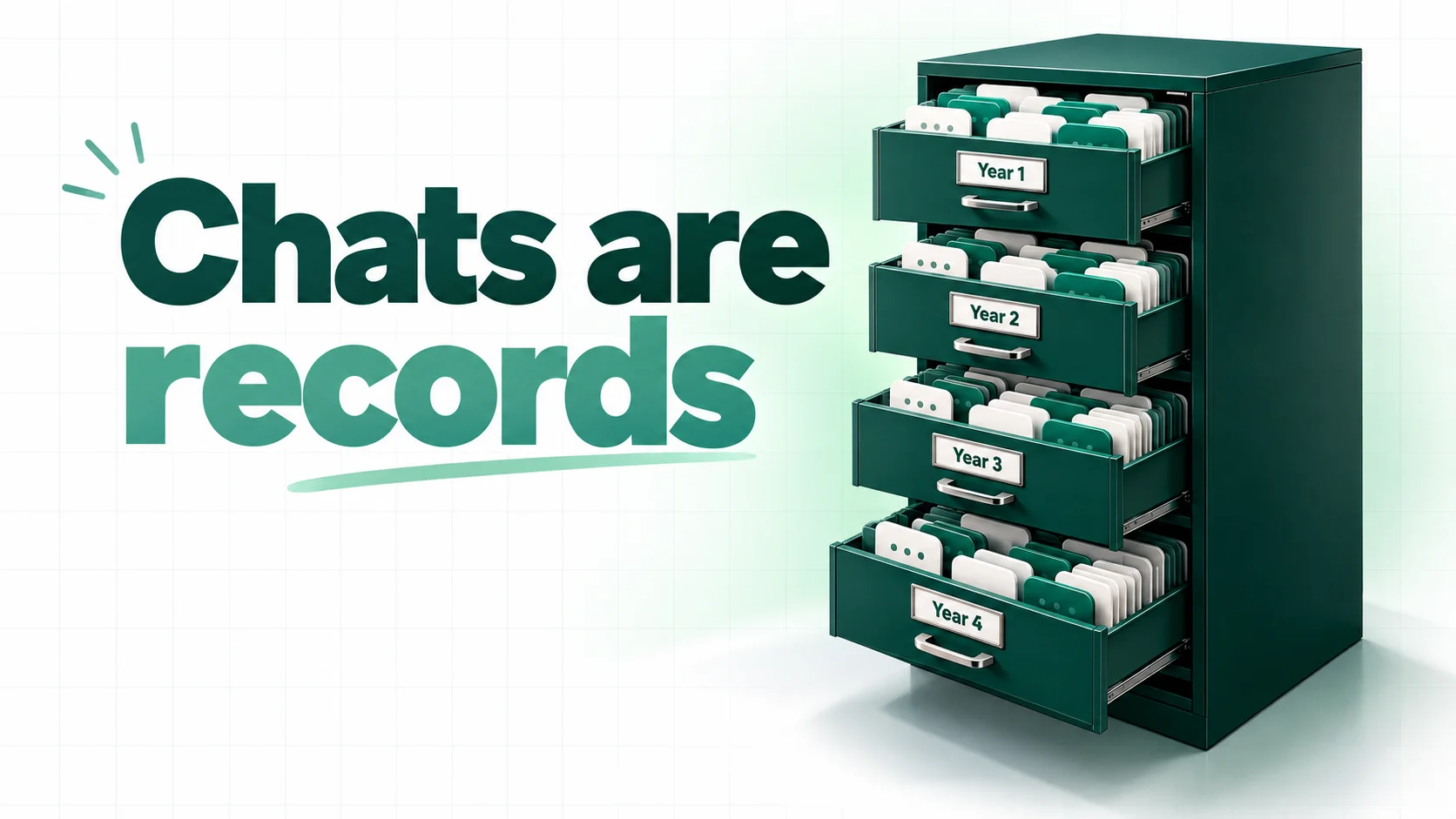
For investment advisers: chats are records
SEBI requires advisers to keep “records of interactions, with all clients including prospective clients (prior to onboarding), where any conversation related to advice has taken place.” The accepted forms are a signed physical record, a telephone recording, an email from a registered email ID, a record of SMS messages, or “any other legally verifiable record” (SEBI: master circular for IAs).
Two lines make WhatsApp part of this:
- Chat logs are records. The same circular says “logs for any usage of such Blogs/Chat forums/Messenger sites (called by any nomenclature) shall be treated as records.”
- Keep them for five years. “IAs shall be required to maintain these records for a period of five years”, and longer while a dispute is open.
In practice: any WhatsApp conversation that touches advice must be kept, retrievable and tied to the client for five years. A chat that lives only on one phone fails that test the day the phone is lost. Decide how you’ll keep the record (an exported transcript, a summary emailed to the client from your registered email ID, or your back-office notes) before you start advising on WhatsApp.
Two related rules shape what you send:
- Risk profile consent goes by email or on paper. SEBI says to obtain the client’s consent on the completed risk profile “either through registered email or physical document”, so a WhatsApp “OK” isn’t enough.
- No free trials. “IAs shall not provide free trial for any products/services to prospective clients”, so a “free week of recommendations” offer on WhatsApp is out.
For everyone: the advertising rules cover WhatsApp messages
SEBI’s advertisement code for advisers and research analysts applies to communications “such as electronic mail, text messaging, messaging platforms, social media platforms.” So a promotional WhatsApp message is an advertisement. The code bans:
- “Any promise or guarantee of assured or risk free return.”
- “Any misleading or deceptive testimonials.”
- The SEBI logo, and superlatives such as “Best” or “No. 1”.
- Past performance unless it’s verified by the Past Risk and Return Verification Agency (PaRRVA).
Adverts also need prior approval from the supervisory body. Where a short message can’t carry all the required details, SEBI says the “official website hyperlink should be provided”. Advisers’ adverts must carry the line: “Registration granted by SEBI, enlistment with IAASB and certification from NISM in no way guarantee performance of the IA or provide any assurance of returns to investors.”
Distributors follow AMFI’s code: disclose commissions, use social media responsibly, make no “false or defamatory statements… (including chat groups, social media…)”, and keep performance disclosures within SEBI’s rules (AMFI).
No association with unregistered “finfluencers”
Since SEBI’s amended intermediaries regulations of August 2024 and its circular of 22 October 2024, SEBI-regulated people “shall not have any direct or indirect association” with anyone who gives securities advice without registration or “makes any claim, of returns or performance” (SEBI circular). Forwarding an unregistered tipster’s WhatsApp messages to clients, or paying one to promote you, is the kind of association to avoid.
Collecting fees: validated UPI IDs for advisers
From 1 October 2025, SEBI requires registered intermediaries, including investment advisers and research analysts, to obtain a structured “@valid” UPI ID for collecting money from investors; clients can check it with SEBI’s “SEBI Check” tool (SEBI circular). If you send a fee reminder on WhatsApp, use that ID. Distributors aren’t on the list, because investors pay fund houses directly.
WhatsApp’s own rules
WhatsApp’s Business Messaging Policy doesn’t list investment advice or securities as prohibited, but it does ban cryptocurrency offerings, binary options, payday loans and similar products “irrespective of the global or local licenses” a business holds. It also requires opt-in before you message someone, and says businesses must not ask people for “full length individual payment card numbers, financial account numbers, personal ID card numbers, or other sensitive identifiers” (WhatsApp Business policy).
Data protection
India’s Digital Personal Data Protection Rules, 2025 were notified on 13 November 2025. The consent and notice duties start 18 months later, around May 2027 (MeitY gazette notification). Build the habits now: tell clients what you collect on WhatsApp and why, collect only what you need, and delete what you no longer need.
This section summarises rules as of October 2026 and isn’t legal advice. Check current circulars, or ask your compliance adviser, before you launch.
Business app or the WhatsApp Business Platform?
The WhatsApp Business app is free and fine for a new adviser with a few dozen clients. You get labels, quick replies, a greeting message and broadcast lists of up to 256 contacts who have saved your number. It runs on your phone, with a small number of linked devices, and everything sits in one person’s chat list.
The WhatsApp Business Platform (API), through a provider such as ChatMitra, suits a practice with hundreds of clients or a team:
- Approved templates with each client’s name, scheme, amount and date filled in, sent to clients who opted in, whether or not they saved your number.
- Date-based automation, such as a message a set number of days before a review date.
- Scheduled sends, such as SIP reminders that go out three days before each debit date.
- One number, several people. An assistant answers routine questions from a shared inbox while you handle advice.
- PDF headers, so a portfolio summary or checklist arrives as a document attached to the message.
For the full comparison, see WhatsApp Business app vs API. For setup, see how to get the WhatsApp API.
Client journeys that belong on WhatsApp
An advisory practice runs on a few repeating moments. Each maps to a WhatsApp message with a Meta category, and the category decides the price. Meta assigns the final category when it approves your template; the column below is the likely one based on Meta’s category definitions (Meta: template categorization).
| Moment | Message | Likely category | India rate per delivered message |
|---|---|---|---|
| Onboarding | Welcome, documents checklist, KYC status | Utility | ₹0.115 |
| SIP debit coming up | ”Your SIP of ₹5,000 in [scheme] debits on 5 November. Please keep the balance ready.” | Utility | ₹0.115 |
| SIP instalment failed | Factual notice and what to do | Utility | ₹0.115 |
| Portfolio summary | Monthly or quarterly valuation, as a PDF | Utility | ₹0.115 |
| Review due | Invitation to book the annual review | Utility or marketing | ₹0.115 or ₹0.8631 |
| Regulatory deadline | Nomination, KYC re-verification or document update reminders | Utility | ₹0.115 |
| New fund or product idea | Anything that promotes a scheme or service | Marketing | ₹0.8631 |
| Market note | Monthly letter, volatility explainer | Marketing | ₹0.8631 |
| Birthday, festival, referral ask | Relationship messages | Marketing | ₹0.8631 |
| Client asks a question | Your reply within 24 hours | Service | First 1,000 a month free, then ₹0.115 |
Rates are from Meta’s India rate card effective 1 October 2026 (Meta: pricing).
SIP reminders that clients thank you for
A missed SIP instalment costs the client units at that month’s price and, if it keeps happening, the SIP itself. A short reminder a few days before the debit date is the most useful message most distributors can send.
- Send it three to five days before the debit date, so the client can move money in time. Salaried clients often need the reminder before payday, not after.
- Keep it factual. The scheme, the amount, the date and the bank account’s last four digits are enough. Meta says utility messages “should not promote, recommend, upsell, or cross-sell products; include offers; or attempt to secure renewals”, and treats mixed content as marketing (Meta: template categorization). So “also consider topping up” turns a ₹0.115 notice into a ₹0.8631 one.
- Group clients by debit date. If your clients’ SIPs debit on the 1st, 5th, 10th and 15th, tag them that way and schedule one send per date each month.
- Follow a failed instalment with one message, not three. State what happened and how to fix it, then leave it to a call.
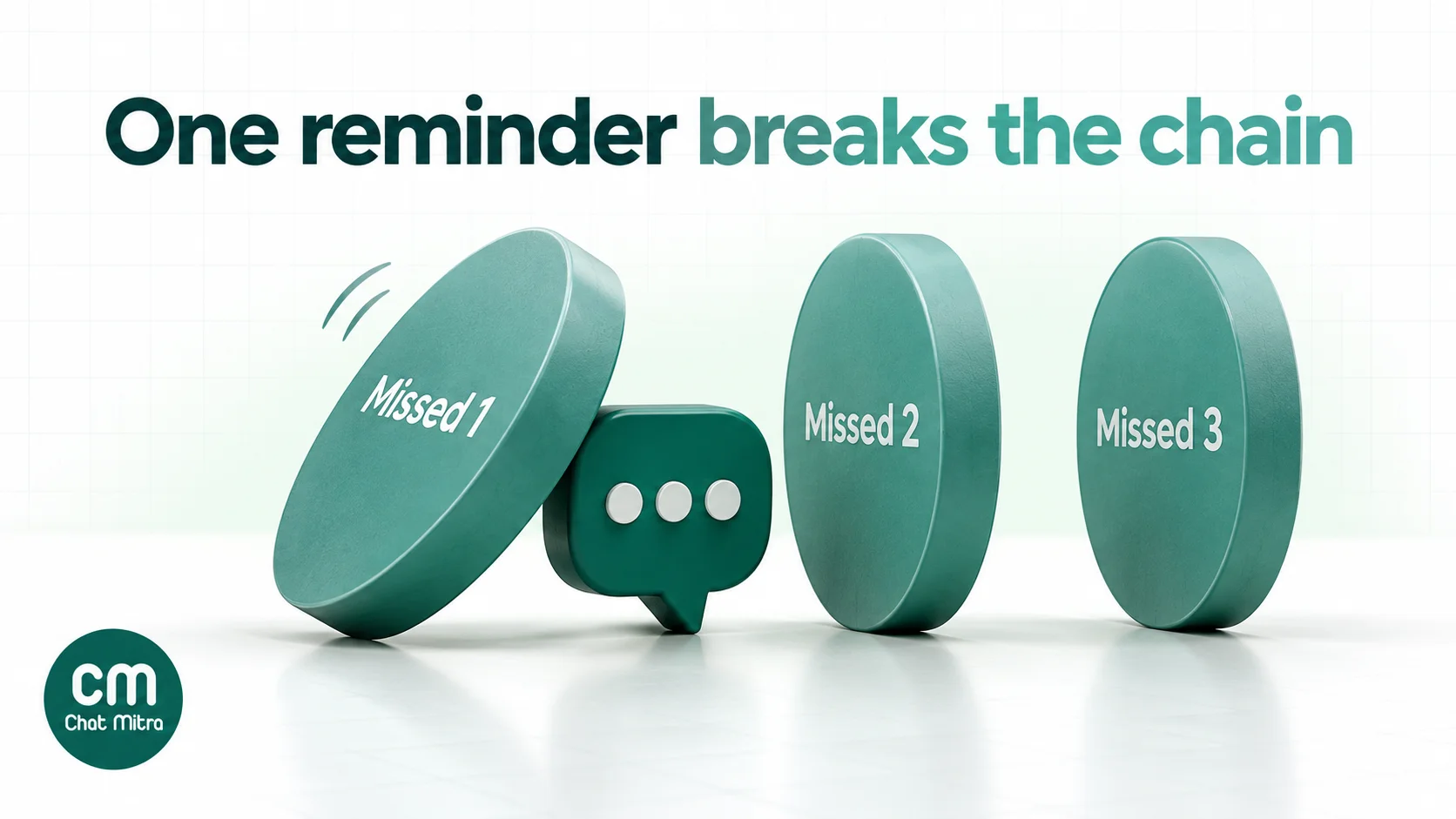
Why it matters: AMFI says SIPs are “treated as ceased/discontinued” after 3 consecutive failed instalments for daily, weekly, fortnightly and monthly SIPs, and 2 for other frequencies (AMFI). A reminder before the second miss can save the SIP. With 32,490 crore rupees collected through SIPs in September 2026 alone, by AMFI’s count, these reminders matter to a lot of households.
KYC and documents without leaking data
WhatsApp is convenient for collecting documents, and that’s the risk. A phone full of clients’ PAN cards and cheques is a data breach waiting for a lost phone.
Ask for a masked Aadhaar, which hides the first eight digits, rather than a full copy, and remind clients never to post their Aadhaar number publicly.
- Send a checklist, not a request for everything. Tell clients exactly which documents are needed and why.
- Never ask for full card numbers, PINs, OTPs or passwords. WhatsApp’s Business Messaging Policy prohibits asking people for full payment card or account numbers and similar sensitive identifiers (WhatsApp Business policy).
- Prefer the official route. KYC through a KRA, the fund house or your transaction platform keeps documents out of chat. Use WhatsApp to tell the client what to do next.
- Delete what you don’t need. Move documents into your records system and remove them from phones.
Portfolio reviews and statements
A review invitation is the message that keeps an advisory relationship alive. Book it on WhatsApp, then hold the review on a call or in person.
- Send a summary before the meeting, as a PDF: holdings, goal progress and the two or three questions you want to discuss.
- Write the outcome down afterwards. If you’re an adviser, the advice belongs in your written records. A WhatsApp voice note isn’t a record of advice you can rely on.
- Use the client’s own date. An annual review on the anniversary of the client’s first investment spreads reviews across the year instead of bunching them in March.
When markets fall
Volatile weeks bring a flood of “Should I stop my SIP?” messages. One calm, factual note to all clients does more than fifty individual replies.
- Explain what happened in two sentences, without predicting what happens next.
- Remind clients of the plan you agreed, and offer a call to anyone whose situation has changed.
- Don’t recommend specific action in a broadcast. Advice depends on the client; a broadcast can’t.
Getting new clients without breaking the rules
WhatsApp is where referrals turn into first conversations. Used carefully, it’s also a lead source in its own right.
- Ask for referrals at the right moment. After a good review, or when a goal is reached, ask whether a friend or relative would value a conversation. A referral ask is a marketing message, so send it only to clients who agreed to hear from you.
- Put a WhatsApp button on your website and visiting card. A click-to-chat link or QR code lets a prospect start the conversation, which also means they messaged you first.
- Run Click-to-WhatsApp ads carefully. Ads that open a chat can work for advisers, but financial-services ads follow Meta’s special rules and aren’t delivered to the WhatsApp Status placement. Our Click-to-WhatsApp ads strategy guide covers the setup and the follow-up.
- Seminars and webinars. Put a QR code on the last slide that opens a chat with a prefilled message, such as “Please send me the retirement checklist”, and send the checklist as the first reply.
- Ask for opt-in before you add anyone to updates. A prospect who asked one question hasn’t agreed to a monthly market note. Our opt-in guide has wording you can use.
Whatever the channel, your outreach is an advertisement under SEBI’s or AMFI’s rules. No assured returns, no testimonials that mislead, no “best adviser in Pune”, and, for distributors, your ARN and “AMFI-registered Mutual Fund Distributor” in the message or the profile.
For more on qualifying the people who do reach out, see WhatsApp lead generation.
Groups, channels and broadcasts: what to avoid
The fastest way for an adviser to get into trouble on WhatsApp is a group.
SEBI’s investor warnings describe the pattern: scamsters “entice investors to join private chat groups or channels on WhatsApp/Telegram e.g. VIP group” (press release 22/2025, April 2025), and SEBI tells investors to “refrain from joining such Whatsapp Groups/ Communities” and to communicate “with only genuine social media handles of SEBI registered entities” (SEBI press release 27/2025). A legitimate adviser running a “market tips” group looks exactly like the thing SEBI warns about.
Two more reasons to avoid client groups. Advice depends on each client’s risk profile, and a group message gives the same view to everyone. And SEBI wants advisers’ certified past-performance data shared “on a one-to-one basis”, not through public media.
Use one-to-one templates instead. A template goes to each client individually, can carry their own name and numbers, and doesn’t expose clients’ phone numbers to each other. In a WhatsApp group, every member can see every other member’s number. That alone is a privacy problem for a client list.
If you want to share general education, such as how SIPs work or what a fund’s riskometer means, a WhatsApp Channel is one-to-many without exposing anyone’s number. Keep it to education, not recommendations. For how groups and communities work for businesses in general, see WhatsApp groups for business.
Protect your clients from investment scams
Fake “SEBI-registered” advisers, fake fund-house WhatsApp groups and stock-tip groups are some of the most common investment frauds in India. Your clients will be targeted, and some will ask you whether a message is real.
SEBI’s 2025 warnings describe the typical pattern: an invitation into a “VIP” WhatsApp or Telegram group, screenshots of other members’ profits, then a fake trading app or a payment to a personal account. SEBI tells investors to deal only with “genuine social media handles of SEBI registered entities.” For advisers and research analysts, the “@valid” UPI ID and SEBI Check give clients a way to confirm that a payment request is genuine.

Tell clients, once and in writing, how you will and won’t contact them:
- You’ll message only from your one official number, with your name or firm as the verified display name.
- You’ll never ask for an OTP, a PIN or a password.
- You’ll never ask them to transfer money to a personal account, or into a “trading app” you’ve linked.
- You’ll never add them to a group that promises returns.
Pin that message, and repeat it when markets are busy, because that’s when scams peak.
Where WhatsApp fits in an adviser’s tools
Many advisers already use WhatsApp through their fund houses without thinking about it. Several AMCs run WhatsApp desks for distributors: Nippon India Mutual Fund, for example, extended its “Business Easy” distributor platform to WhatsApp in 2023, so distributors can run lumpsum and systematic transactions and download account statements by chat (Cafemutual). Those desks serve you, the distributor.
Your own WhatsApp number serves your clients. The two don’t replace each other:
| Tool | What it’s for | Who talks to whom |
|---|---|---|
| AMC distributor desks on WhatsApp | Transactions, statements, your AUM and brokerage | You and the fund house |
| Transaction platforms and back office | Orders, mandates, reports, records | You and your systems |
| Your WhatsApp Business number | Reminders, reviews, questions, referrals | You and your clients |
| Your CRM or spreadsheet | Client details, SIP dates, review dates | Feeds the WhatsApp reminders |
The useful link is the last row: if your SIP and review dates live in a spreadsheet or CRM, they can drive WhatsApp reminders automatically instead of you sending them by hand.
What it costs
Take a distributor with 300 clients, 220 of them with running SIPs. In a typical month:
| Messages in the month | Count | Likely category | Meta charge |
|---|---|---|---|
| SIP debit reminders | 220 | Utility (₹0.115) | ₹25.30 |
| Failed-instalment notices | 12 | Utility (₹0.115) | ₹1.38 |
| Monthly portfolio summaries | 300 | Utility (₹0.115) | ₹34.50 |
| Review invitations | 25 | Marketing (₹0.8631), if Meta classifies them so | ₹21.58 |
| Monthly market note, to clients who opted in | 200 | Marketing (₹0.8631) | ₹172.62 |
| Birthday wishes | 25 | Marketing (₹0.8631) | ₹21.58 |
| Total | 782 | ₹276.96 |
The market note is most of the bill. If Meta approves your review invitations as utility, the month drops to ₹258.26. Replies to clients who message you within the 24-hour customer service window are service messages: the first 1,000 a month per number are free, then ₹0.115 each.
On ChatMitra’s Starter and Pro plans, ChatMitra adds ₹0.20 per conversation: once per client per 24 hours, however many messages you exchange. For these 782 sends, that’s at most ₹156.40 a month, less where one client gets two messages on the same day. Pro, at ₹999 a month, includes 1,000 credits a month, which covers that fee for up to 1,000 conversations. Enterprise has no per-conversation fee. Use the WhatsApp pricing calculator for your own numbers.
Templates for financial advisors
These are starting points. Replace the bracketed parts with template variables, and have your compliance adviser check anything promotional before you submit it to Meta.
| Purpose | Template text | Likely category |
|---|---|---|
| Welcome | ”Hello {{1}}, thank you for choosing {{2}}. To complete your account set-up, please keep these ready: PAN, a cancelled cheque and your nominee’s details. Reply here with any questions.” | Utility |
| SIP reminder | ”Hello {{1}}, your SIP of ₹{{2}} in {{3}} is due on {{4}} from your account ending {{5}}. Please keep the balance ready to avoid a missed instalment.” | Utility |
| Failed instalment | ”Hello {{1}}, your SIP instalment of ₹{{2}} in {{3}} due on {{4}} could not be processed. Please call us or reply here and we’ll help you fix it.” | Utility |
| Portfolio summary | ”Hello {{1}}, your portfolio summary as of {{2}} is attached. Reply ‘CALL’ if you’d like to discuss it.” | Utility |
| Review booking | ”Hello {{1}}, it’s time for your annual portfolio review. Reply with a day that suits you this month, and we’ll confirm a time.” | Utility or marketing |
| Regulatory deadline | ”Hello {{1}}, the deadline to update {{2}} for your folios is {{3}}. Here’s what to do: {{4}}.” | Utility |
| Market note | ”Hello {{1}}, our {{2}} note on what the recent market moves mean for long-term investors is attached. Mutual fund investments are subject to market risks; read all scheme-related documents carefully.” | Marketing |
| Referral | ”Hello {{1}}, thank you for your trust this year. If someone you know would value a conversation about their goals, we’d be glad to help.” | Marketing |
Distributors: add your name, “AMFI-registered Mutual Fund Distributor” and your ARN to the template footer or your profile. Advisers: put your SEBI registration number in the footer, and the required disclaimer, or a link to it on your website, in anything promotional. Templates can’t promise returns, quote unverified past performance or call you the best.
Setting it up in ChatMitra
- Connect one number to the WhatsApp Business Platform, with your own name or your firm’s as the display name.
- Import clients from a CSV, with tags for role (Distribution, Advisory), SIP debit date (SIP-01, SIP-05, SIP-10, SIP-15) and whether they opted in to updates. A CSV import takes up to 10,000 rows.
- Store review and KYC dates on each contact as custom date fields. ChatMitra’s automation can send a template a set number of days before a date in a contact field, matching the full date, year included.
- Or keep a Google Sheet. With Google Sheets Automation, a workflow can send a template a set number of days before a date in a sheet column. The sheet trigger matches day and month only, so a row fires again on the same day next year, which suits annual reviews and investment anniversaries.
- Schedule SIP reminders by debit-date tag. ChatMitra has no recurring broadcast, so schedule each month’s sends once, for example on the 1st for the whole month: SIP-05 clients on the 2nd, SIP-10 clients on the 7th, and so on.
- Add a “Do not message” tag and exclude it from every campaign. ChatMitra’s broadcasts don’t automatically skip people who stopped marketing messages in WhatsApp.
- Add your assistant as a team member, with permissions per section. ChatMitra has no chat assignment, so agree who answers which clients.
- Set a welcome message and keyword replies, such as “KYC” for the checklist and “SIP” for how to change a mandate.
ChatMitra’s advantages for advisory practices:
| Advantage | What it means |
|---|---|
| Starter is free | Reminders and replies from an official API number without a subscription |
| Meta’s rates at cost | A SIP reminder costs Meta’s ₹0.115 utility rate, plus ₹0.20 per conversation on Starter and Pro |
| Unlimited team members on one number | An assistant and a partner can work from the same inbox |
| Pro (₹999 a month) adds webhooks, Auto Reply and the AI chatbot | Incoming messages can flow into your own systems; keyword replies handle routine questions |
Good to know: ChatMitra has no self-serve export of chat transcripts. On Pro, webhooks send every incoming message and every message sent through the API to your own system, but messages typed in the inbox or sent as campaigns don’t trigger a webhook. If you’re a SEBI-registered adviser, advice-related chats are records you must keep for five years, so keep a copy in your own records system (a written summary emailed from your registered email ID works) rather than relying on chat history. The AI chatbot answers from material you provide using your own AI provider key; don’t let it answer questions that need advice.
What to measure
| Metric | Why it matters |
|---|---|
| SIP instalments missed per month | The clearest sign reminders are working |
| Reviews booked ÷ reviews due | Whether the relationship rhythm is holding |
| Median reply time to client questions | Clients judge service by it |
| Opt-outs and blocks after each marketing send | Whether your market note is welcome |
| Referral conversations started | Whether happy clients are bringing others |
Common mistakes
- Running the practice from a personal number. When the phone is lost or the assistant leaves, the client history goes too.
- Mixing distribution and advice in one broadcast. Keep separate lists, separate tags and separate wording.
- Adding “top up now” to a SIP reminder. It turns a cheap utility notice into a marketing message, and it reads like selling.
- Sharing tips or performance claims. Nothing on WhatsApp should promise or imply returns.
- Collecting documents in chat and keeping them on phones. Move them into your records and delete them.
- Groups for clients. They expose everyone’s number and blur education into advice.
- Treating a prospect’s question as consent. Ask before adding anyone to updates.