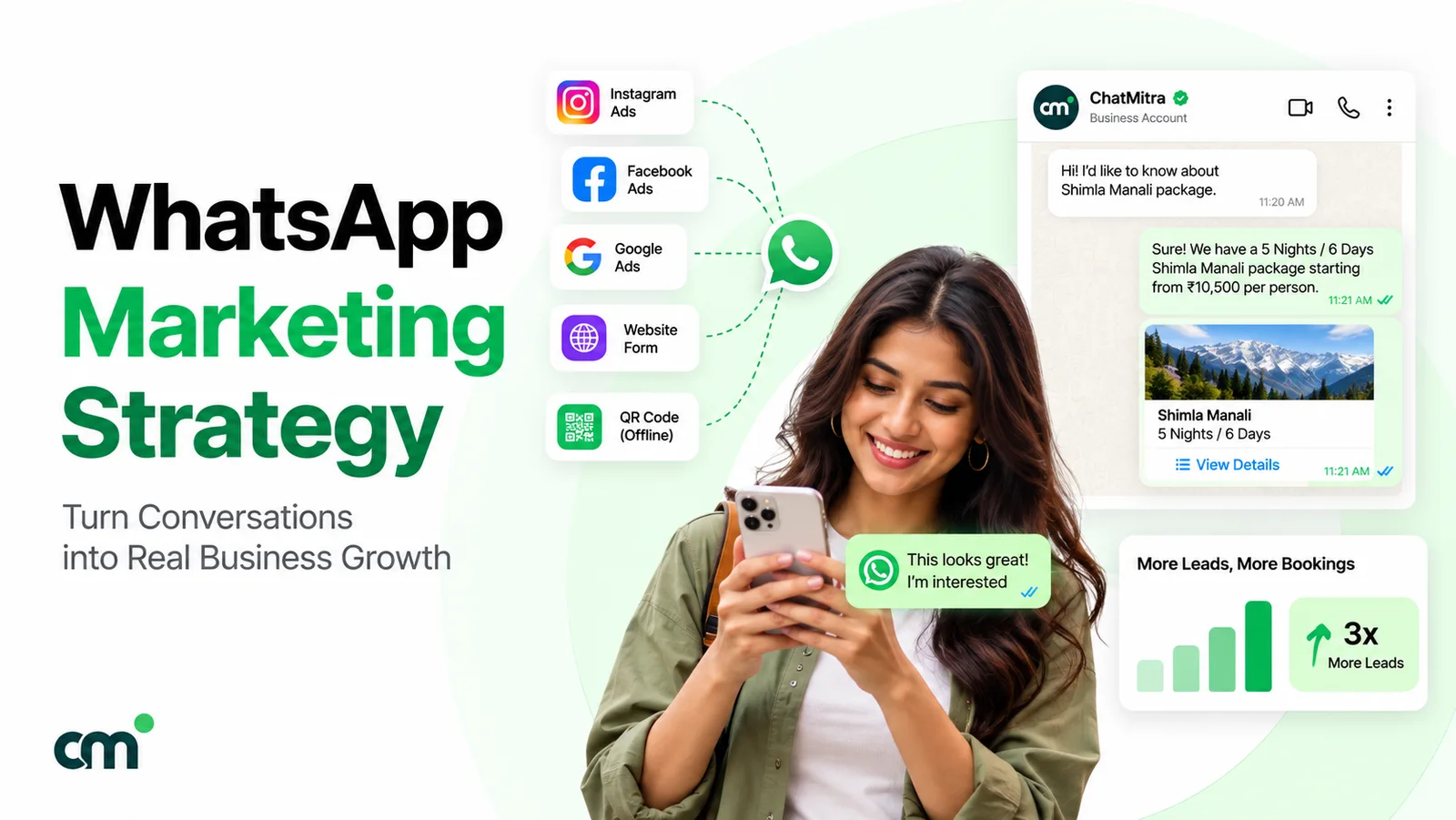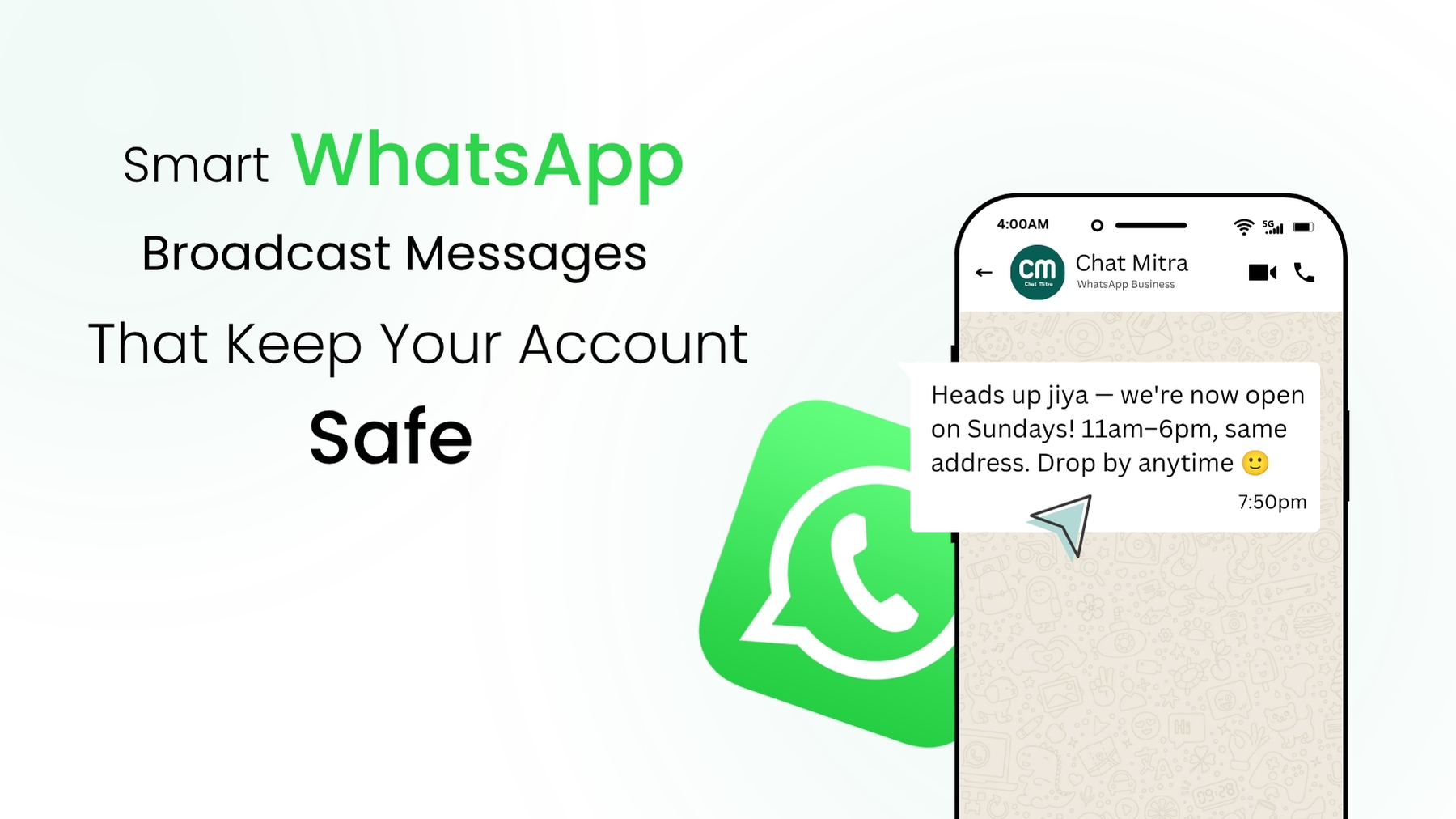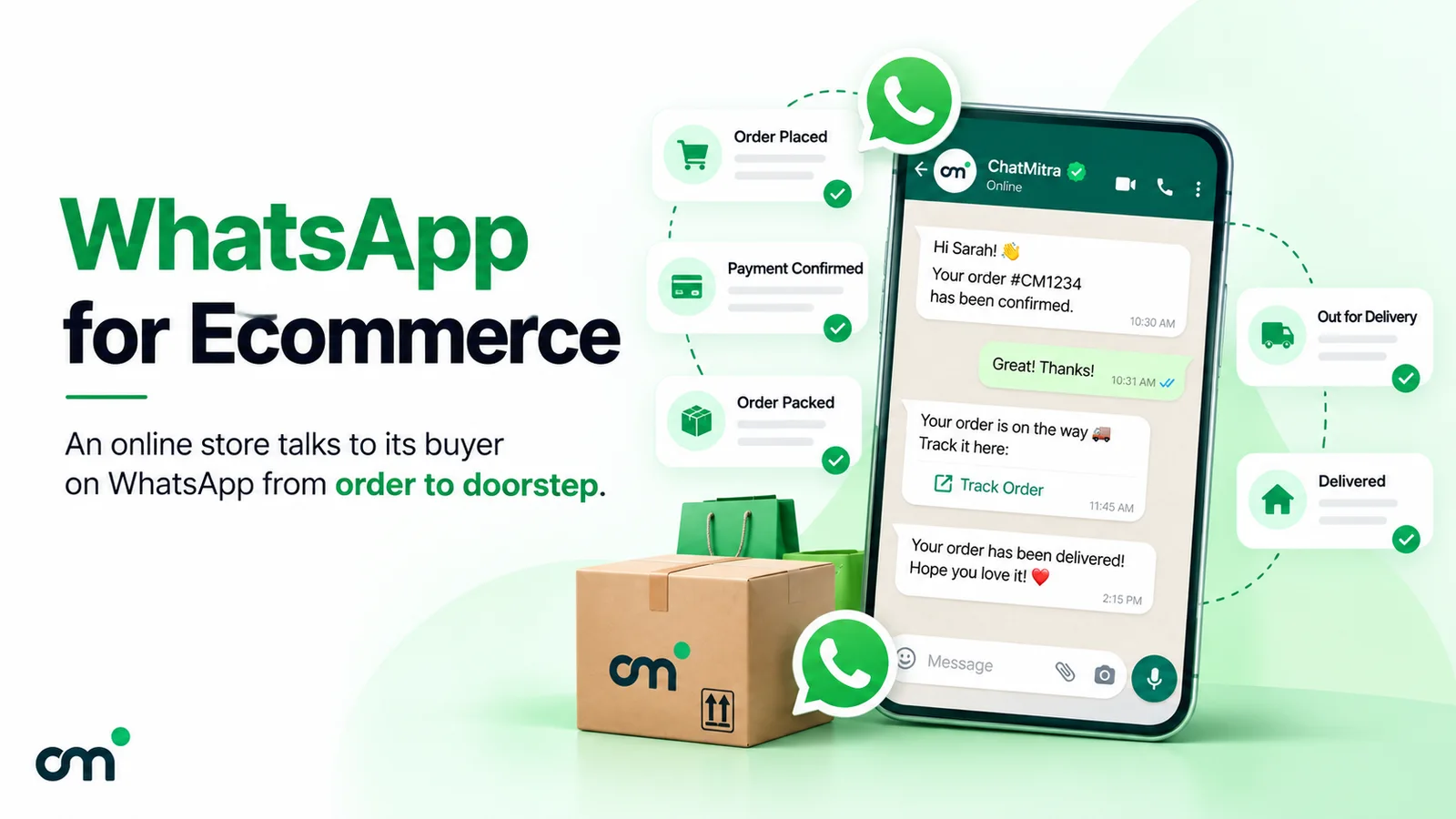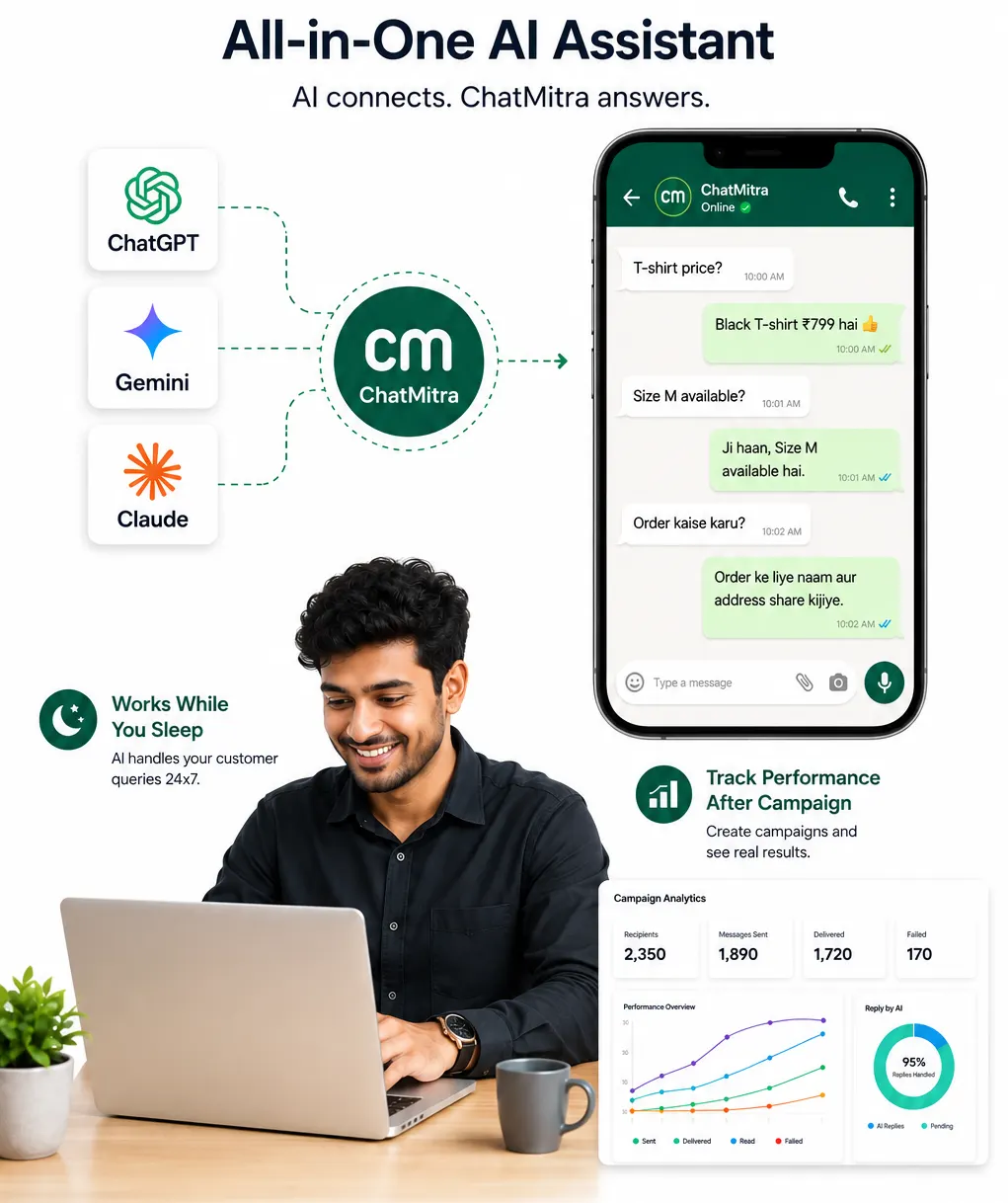
A WhatsApp marketing campaign is a planned message, or a short sequence of messages, sent to customers who opted in, with one goal and one metric. The strongest ideas are tied to a trigger: a launch, a date, an abandoned cart, a lapsed customer, or a keyword the customer sends. Each uses an approved template, usually in Meta’s marketing category.
Below are 18 campaign ideas, each with its goal, trigger, Meta template category and cost, timing, the metric to watch and a sample line. After them come six real brand campaigns and their published results, then the cost maths, how to choose, run and measure a campaign, and the mistakes to avoid.
Key takeaways
- Pick campaigns by trigger. A message sent because something happened (a cart, a birthday, a lapse) usually beats one sent because it's Tuesday.
- Most campaign messages are marketing templates under Meta's rules, including cart reminders and renewal offers. Utility is for non-promotional messages tied to the customer's own order, account or request.
- Plan fewer, sharper sends. WhatsApp limits how many marketing messages each person receives, and it doesn't deliver marketing templates to US numbers.
Rupee figures are Meta's India rates and exclude tax. Sources are listed at the end.
What is a WhatsApp marketing campaign?
It is any planned outbound message that promotes, recommends or re-engages. The WhatsApp Business Messaging Policy allows it only if “they have given you their mobile phone number or username” and you have “received opt-in permission from the recipient” (WhatsApp Business Messaging Policy).
There are two ways to send one:
- The WhatsApp Business Platform (API). Campaigns go out as Meta-approved template messages through a provider or your own integration, with segmentation, automation and triggers.
- The WhatsApp Business app. Its paid marketing messages feature sends a message with media and a button to a chosen audience, now or on a schedule. The Help Center says the feature is “currently available in limited countries” and is now called business broadcasts in some of them (WhatsApp Help Center).
A broadcast is one send to many people. A campaign can be a broadcast, a triggered sequence, or an entry point that invites customers to message you. For the plan around campaigns (goals, calendar, budget), read the WhatsApp marketing strategy guide; this page is the idea bank.
The five parts every campaign needs
Each idea below uses the same five parts. If one is blank, the campaign isn’t ready.
- Audience. Who gets it and why they opted in: usually a segment by tag, purchase history or date.
- Trigger. What starts the send: a one-off broadcast, a date, an event (checkout left, order delivered), behaviour on an earlier message (read, failed), or a keyword the customer types.
- Template category. Marketing, utility or authentication. Meta’s template categorisation guidelines say marketing covers goals “from generating awareness to driving sales and retargeting customers”, while utility must be non-promotional and “specific to or requested by the user”. The category sets the price.
- Timing. When it goes, how many messages, and what stops the sequence.
- KPI. One number that shows whether it worked. Read rate alone rarely does.
18 WhatsApp marketing campaign ideas at a glance
| # | Campaign | Trigger | Usual category |
|---|---|---|---|
| 1 | New product or collection launch | One-off broadcast | Marketing |
| 2 | Flash sale with a deadline | One-off broadcast | Marketing |
| 3 | Festival and seasonal campaigns | Date | Marketing |
| 4 | Back-in-stock and price-drop alerts | Event | Marketing |
| 5 | Post-purchase cross-sell | Event plus delay | Marketing |
| 6 | Replenishment reminders | Date after purchase | Marketing |
| 7 | Abandoned-cart recovery | Event (checkout left) | Marketing |
| 8 | Retargeting an earlier campaign | Behaviour on a previous send | Marketing |
| 9 | Win-back for lapsed customers | Segment by last order | Marketing |
| 10 | Renewal and upgrade offers | Date | Marketing (a plain billing notice can be utility) |
| 11 | Welcome series for new subscribers | Event (opt-in) | Utility for the confirmation, marketing after |
| 12 | Birthday and anniversary offers | Date | Marketing |
| 13 | VIP early access | One-off broadcast to a tag | Marketing |
| 14 | Event and webinar invitations | Broadcast, then date | Marketing invite; reminders depend on content |
| 15 | Feedback that leads to a review | Event (delivery) | Utility only if specific to the order |
| 16 | Referral campaigns | Event (happy customer) | Marketing |
| 17 | Keyword and QR code entry campaigns | Keyword the customer sends | Service replies inside the window |
| 18 | Click-to-WhatsApp ad campaigns | Customer taps an ad | Free for 72 hours in a free entry point window |
The example lines are illustrations; {{1}} marks a per-customer variable. For ready-to-send wording, see the WhatsApp broadcast message examples.
Campaigns that sell to people who already know you
Narrow segments of existing customers work best here.
1. New product or collection launch
Goal: first sales from the people most likely to want it. A Jaipur jewellery store launching silver anklets should tell past silver buyers, not everyone who once asked about gold rates.
- Trigger and timing: a one-off broadcast on launch morning. A second message only to people who showed interest, a day or two later.
- Category and cost: marketing; ₹0.8631 per delivered message in India on Meta’s rate card effective 1 October 2026.
- KPI: orders from the segment, not read rate.
- Example: “Hi {{1}}, our new silver anklet collection is live today, with 24 designs in stock. See them here before the weekend.”
2. Flash sale with a deadline
Goal: a burst of orders in a short window. The deadline is the reason to act now.
- Trigger and timing: a one-off broadcast when the sale opens, with enough time left to act. A sale ending at midnight shouldn’t be announced at 10 pm.
- Category and cost: marketing. Meta’s limited-time offer templates can “display expiration dates and running countdown timers for offer codes”. They are marketing-only and don’t show the offer on WhatsApp Web or desktop.
- KPI: orders before the deadline.
- Example: “Our 12-hour sale is on: 30% off all running shoes until 9 pm tonight, {{1}}. Tap below to shop your size.”
3. Festival and seasonal campaigns
Goal: ride a moment customers already care about: Diwali, Eid, Onam, Christmas, the monsoon, the end of the financial year. Global brands add Black Friday, Ramadan or Singles’ Day.
- Trigger and timing: a date, sent ahead of it, since gift shoppers buy early. Two or three sends at most.
- Category and cost: marketing. One of Meta’s own awareness examples is a festival invitation (“{{Diwali}} is around the corner!”).
- KPI: revenue per delivered message, against last season.
- Example: “Diwali gifting is open, {{1}}. Hampers from ₹499, packed and shipped from our Surat store within two days.”
Festival wording lives in the Diwali and Navratri messages guide and the Christmas and New Year messages guide.
4. Back-in-stock and price-drop alerts
Goal: convert demand you already saw.
- Trigger and timing: a stock or price event for a product someone saved. If stock is short, alert in small batches so 5,000 people don’t chase 40 units.
- Category and cost: marketing. It feels like service, but Meta lists “We found a {{car}} that meets your saved search” under retargeting, which is marketing “even if requested by users”.
- KPI: conversion from alert to order.
- Example: “Good news, {{1}}: the linen shirt you saved is back in size M. We’re holding a few for alert subscribers until Sunday.”
5. Post-purchase cross-sell
Goal: a second order, usually easier to win than the first.
- Trigger and timing: delivery plus a delay long enough for the customer to use the product: a week for a phone case, longer for skincare.
- Category and cost: marketing. Keep the offer out of the delivery update; Meta treats “an order update with a promo” as marketing.
- KPI: second-order rate.
- Example: “Hope the new blender is working well, {{1}}. The matching travel jar fits it exactly, and it’s 15% off for you this week.”
6. Replenishment reminders
Goal: catch the reorder before the customer runs out, for consumables such as pet food, coffee or water filters.
- Trigger and timing: a date worked out from the last purchase, a few days before the likely run-out. One reminder, not a series.
- Category and cost: marketing, because it asks for a purchase.
- KPI: reorder rate against similar customers who didn’t get it.
- Example: “Your 3 kg bag of dog food should be running low about now, {{1}}. Reorder in one tap and it ships tomorrow.”
Campaigns that recover revenue
Money you nearly had. These are the most automated ideas, and the easiest to overdo.
7. Abandoned-cart recovery
Goal: bring back shoppers who started checkout, left a WhatsApp number, opted in, and stopped.
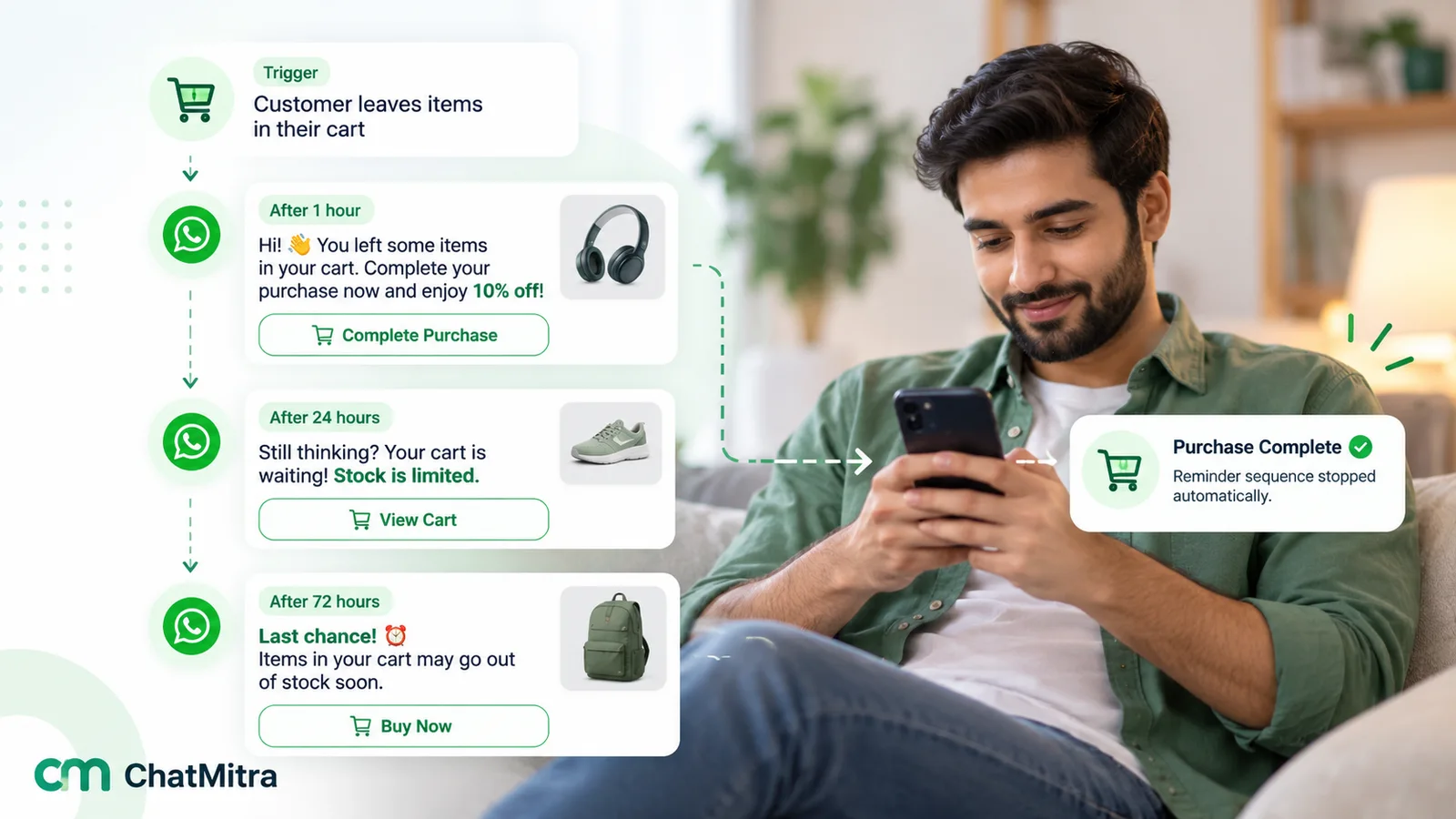
- Trigger and timing: a checkout event, then a short sequence, commonly three reminders: soon after, later that day or the next, and a last one. The sequence must stop the moment an order is placed. Save any discount for the last step.
- Category and cost: marketing. Meta’s own retargeting example is “You left {{items}} in your cart!”
- KPI: carts recovered per reminder. If the third recovers almost nothing, drop it.
- Example: “You left 2 items in your cart, {{1}}. We’ve saved them for you; checkout takes under a minute from here.”
The WhatsApp for ecommerce guide covers the full store journey, including COD confirmation.
8. Retargeting an earlier campaign
Goal: a second chance with people who showed interest or never got the first message.
- Trigger and timing: behaviour on a previous send, typically everyone who read it, or everyone whose message failed. Wait at least a day. For failures with error 131049 (the person hit WhatsApp’s marketing limit), Meta says to “wait at least 24 hours before resending”; repeated early retries can make delivery “unavailable for up to 24 hours” (per-user marketing limits).
- Category and cost: marketing.
- KPI: extra orders beyond the first send.
- Example (to readers who didn’t buy): “Still thinking about the monsoon collection, {{1}}? Free delivery on it ends Friday.”
9. Win-back for lapsed customers
Goal: reactivate customers whose last order is older than your normal cycle: 90 days for a café, a year or more for a mattress shop.
- Trigger and timing: a segment built from order dates, sent once. A silent customer who keeps getting offers is a likely block or report.
- Category and cost: marketing.
- KPI: share of the segment that orders within 30 days.
- Example: “It’s been a while, {{1}}. Here’s what’s new on our menu since your last visit, and your next coffee is on us this month.”
10. Renewal and upgrade offers
Goal: keep subscribers, members and policyholders, or move them up a plan.
- Trigger and timing: a date before expiry: a plain notice first, then an offer only to those who haven’t renewed.
- Category and cost: this is where category matters most. Meta lists “Your subscription will expire on {{date}}! Renew today to save {{discount}}” as marketing, while a plain note that a monthly payment “will be billed on {{date}}” appears among its utility examples. Keep the two apart.
- KPI: renewals before expiry.
- Example (marketing): “Your gym membership ends on {{1}}. Renew this week and get the second month at half price.”
Campaigns that build the relationship
These make the next sale easier and keep your number’s quality healthy.
11. Welcome series for new subscribers
Goal: turn a fresh opt-in into a first purchase while interest is high. This is the classic WhatsApp drip campaign.
- Trigger and timing: the opt-in (a form, a checkout box, a keyword), then three messages over about a week: what to expect, your most useful product or guide, a first-order offer.
- Category and cost: the confirmation can be utility; Meta’s utility examples include “Thanks for confirming opt-in! You’ll now receive notifications via WhatsApp.” Anything promotional after that is marketing.
- KPI: first purchases within the series.
- Example (day 3): “Most first-time customers start with our cold-pressed groundnut oil, {{1}}. Here’s why, and a 10% welcome code.”
The WhatsApp opt-in guide covers the consent wording.
12. Birthday and anniversary offers
Goal: a personal reason to buy, for contacts with a birth date or first-purchase date on file.
- Trigger and timing: a date field checked daily; send that morning, or a few days early if the offer needs a booking.
- Category and cost: marketing. Meta’s relationship-building examples include a birthday wish.
- KPI: coupon redemptions.
- Example: “Happy birthday, {{1}}! Your free dessert is waiting at any of our Pune outlets for the next 7 days.”
13. VIP early access
Goal: reward your best customers and fill the first hours of a sale.
- Trigger and timing: a broadcast to a VIP tag (by spend or order count) a few hours or a day before the public launch. Say exactly when early access ends.
- Category and cost: marketing.
- KPI: share of sale revenue from the VIP segment.
- Example: “You’re one of our top 200 customers, {{1}}, so the winter sale opens for you tonight at 8, a full day early.”
14. Event and webinar invitations
Goal: registrations, then attendance, for openings, demos, open days or webinars.
- Trigger and timing: a broadcast invite one to two weeks ahead, then reminders to registrants the day before and an hour before.
- Category and cost: the invitation is marketing. A plain reminder to a registrant may qualify as utility; anything promotional makes it marketing.
- KPI: registrations per delivered invite, and attendance per registration.
- Example: “Our studio is hosting a free saree-draping session on {{1}}. Seats are limited to 20, so reply YES to book yours.”
15. Feedback that leads to a review
Goal: catch problems before they go public, and ask happy customers for a review.
- Trigger and timing: delivery or a completed appointment, once the customer has used what they bought.
- Category and cost: utility only if it is specific. Meta says “a general/generic survey or request for feedback will not be approved as utility”, and a survey with promotional content is marketing.
- KPI: reviews posted, and problems fixed.
- Example: “Your order {{1}} was delivered yesterday. Did everything arrive as expected? Tap a button below to tell us.”
For wording and review etiquette, see how to ask customers for feedback.
16. Referral campaigns
Goal: new customers introduced by existing ones; forwarding is already a WhatsApp habit.
- Trigger and timing: right after a signal of a happy customer, such as a good review or a repeat order.
- Category and cost: marketing.
- KPI: first orders from referred customers.
- Example: “Glad you liked it, {{1}}! Share this link with a friend: they get ₹200 off their first order, and so do you.”
Keep rewards simple. A prize draw with anything of monetary value in the entry or the prize can fall under the policy’s gambling and gaming rules (see the mistakes section).
Campaigns that get people to message you first
When the customer starts the chat, a 24-hour customer service window opens for free-form replies. These campaigns build the list.
17. Keyword and QR code entry campaigns
Goal: opt-ins from offline placements. A QR code on a receipt, menu or delivery box opens WhatsApp with a pre-filled word such as OFFER.
- Trigger and timing: the keyword the customer sends; a keyword rule replies instantly and asks permission to send updates.
- Category and cost: replies inside the window are service messages. From 1 October 2026 each business phone number gets 1,000 free delivered service messages a month, then pays the market’s utility rate (₹0.1150 in India).
- KPI: opt-ins per placement. Use a different keyword on each placement.
- Example (reply): “Thanks for scanning! Here’s today’s lunch menu. Want our Friday specials on WhatsApp? Reply YES.”
Make the code with the free WhatsApp QR code generator; the WhatsApp lead generation guide covers entry points in depth.
18. Click-to-WhatsApp ad campaigns
Goal: turn Facebook and Instagram ad taps into conversations instead of website visits.
- Trigger and timing: an ad tap that opens a chat; reply fast.
- Category and cost: per Meta’s pricing page, replying within 24 hours opens a free entry point window that stays open for 72 hours, during which “you can send any type of message to the user at no charge”. You still pay for the ad, and the window opens only for messages sent from WhatsApp’s Android or iOS app.
- KPI: cost per qualified conversation, then cost per sale.
- Example (first reply): “Hi! Thanks for tapping our ad for the Goa weekend packages. Which month are you planning to travel?”
Real WhatsApp marketing campaign examples from brands
Here are six real campaigns from Meta’s published WhatsApp success stories, each with a clear campaign, a measurable result and the idea it illustrates.
| Brand | Country | Campaign | Idea | Published result |
|---|---|---|---|---|
| TriHealth | Malaysia | Marketing messages to shoppers who left checkout | 7 (abandoned cart) | 49% lower cost per purchase, 48% higher sales |
| Gain City | Singapore | Black Friday reminders to opted-in customers, 17–30 Nov 2025 | 3 (seasonal), 13 (early access) | 13% lower cost per click |
| Prima AFP | Peru | Re-engaging its database plus click-to-WhatsApp ads, 1 Jan–20 Mar 2026 | 9 (win-back), 18 (ads) | 18% lower cost per lead |
| The Little Farm Co | India | Recipe videos in click-to-WhatsApp ads | 18 (ads) | 46% more messages at 32% lower cost |
| FliQi Education | India | Click-to-WhatsApp ads for exam coaching, 15 Dec 2023–2 Apr 2024 | 18 (ads) | 2,500 clients acquired |
| PC Chandra Jewellers | India | A guided shopping assistant on WhatsApp, one-month test | 17 (customer messages first) | 89% higher engagement than its website journeys |
TriHealth: turning abandoned checkouts into conversations
TriHealth, a Malaysian probiotics and gut-health brand, ran conversion ads that sent shoppers to its website. Visitors who didn’t complete a purchase then received marketing messages on WhatsApp, sent through Meta Ads Manager. The messages opened chats where the team answered product questions before checkout. Meta’s case study reports a 49% lower cost per purchase, 48% higher sales and a 51% better return on ad spend.
What to copy: treat the cart reminder as the start of a conversation. Someone who left checkout often has one unanswered question, so staff the replies.
Gain City: warming up customers before Black Friday
Gain City, a Singapore electronics and appliance retailer, sent photo-based marketing messages to existing customers who had opted in, reminding them of deals before its Black Friday sale started. It ran the campaign from 17 to 30 November 2025 and used an A/B test in Ads Manager to compare results with and without the WhatsApp placement. It reports a 13% lower cost per click and a lower cost per add-to-cart.
What to copy: remind opted-in customers before the sale starts, and test with and without WhatsApp so you know what it added.
Prima AFP: re-engaging an existing database
Prima AFP, a Peruvian pension fund manager, worked with the media agency OMD Peru to prove WhatsApp’s value before spending more on it. Between 1 January and 20 March 2026 it combined click-to-WhatsApp ads for new prospects with marketing messages to people already in its database. Meta reports an 18% lower cost per lead than Prima’s usual approach, and a 14% higher click-through rate for the marketing messages.
What to copy: message the people you already have, advertise to the ones you don’t, and compare both with your usual cost per lead.
The Little Farm Co: recipe videos that start chats
The Little Farm Co, an Indian maker of pickles and farm foods, ran click-to-WhatsApp ads with short video and GIF creative built around family recipes; video ads on Instagram performed best. Once someone tapped through, a WhatsApp bot handled product questions and shared the catalogue. According to the case study, the brand got 46% more customer messages at 32% lower cost.
What to copy: content people want, such as a recipe or a how-to, gives them a reason to start the chat. The product conversation follows.
FliQi Education: leads from rural Rajasthan
FliQi Education sells preparation courses for the Rajasthan Administrative Service (RAS) exam. Working with a Meta Business Partner, it ran click-to-WhatsApp ads from 15 December 2023 to 2 April 2024, aimed at 21 to 45-year-olds who had engaged with RAS exam content. Meta reports 2,500 clients acquired, an 85% conversion rate on qualified leads, and ads accounting for 60% of FliQi’s business during the campaign.
What to copy: for a considered purchase like a course, a counsellor on WhatsApp answers what a landing page can’t. Target people already interested in the topic.
PC Chandra Jewellers: guided shopping in chat
PC Chandra Jewellers tested a guided shopping assistant on WhatsApp, built on Meta’s Business Agent with the partner Engati, for one month. The assistant helped online shoppers explore collections and passed serious buyers to store teams. The jeweller reports 89% higher customer engagement than its website-led journeys, and says 94% of interactions used the guided flows rather than free-form browsing.
What to copy: for high-value products, a campaign can be an invitation to chat rather than a promotion. Buttons and short guided steps keep the conversation moving toward a store visit or a sales call.
How to read these case studies
Each page notes that results are “self-reported and not identifiably repeatable”. They show a tactic can work; they aren’t benchmarks. Also note:
- They lean towards ads. Meta’s stories promote its own products, so most involve click-to-WhatsApp ads or marketing messages sent through Ads Manager. The same ideas also run through a Business Platform provider as template broadcasts, cart reminders and keyword entry points.
- Most report a cost metric, such as cost per lead or purchase, not open rates. Judge your own campaigns the same way.
What does a WhatsApp marketing campaign cost?
Meta’s pricing page says you are “only charged when a template message is delivered”, at a rate set by the template’s category and the recipient’s country calling code. From Meta’s INR rate card effective 1 October 2026:
| Recipient's market | Marketing | Utility |
|---|---|---|
| India | ₹0.8631 | ₹0.1150 |
| United Arab Emirates | ₹4.2114 | ₹1.1509 |
| United Kingdom | ₹4.6496 | ₹1.6122 |
| Brazil | ₹4.5808 | ₹0.4984 |
| North America | ₹1.8313 (not delivered to US numbers) | ₹0.2491 |
Example: a launch to 2,000 Indian contacts costs up to 2,000 × ₹0.8631 = ₹1,726.20 in Meta charges, less any failures. Your platform adds its fee. On ChatMitra’s Starter and Pro plans that is ₹0.20 per contact per 24-hour conversation window, so if every send opens a new window the fee is 2,000 × ₹0.20 = ₹400, about ₹1.06 per contact in total.
Marketing templates are charged even when the customer is already chatting with you, and Meta may update rates only on the first day of a quarter. For volume tiers and budgeting, see the WhatsApp Business cost per message guide.
How to pick your first WhatsApp campaign
Start with the data you already have.
| If you have… | Start with | Why |
|---|---|---|
| An online store with checkout | Abandoned-cart recovery (7) | The trigger already exists, and intent is high |
| A customer list with order dates | Win-back (9) or replenishment (6) | A segment you can build today from past orders |
| Birth dates or join dates | Birthday and anniversary (12) | Runs daily with no new creative each time |
| Very few opted-in contacts | Keyword and QR entry (17) or click-to-WhatsApp ads (18) | Grow the list before planning broadcasts |
| A launch or a sale coming up | Launch (1) or flash sale (2), then retargeting (8) | One send plus one follow-up to the engaged group |
| Subscriptions or memberships | Renewal (10) | Each renewal is revenue you already had |
Run one campaign well before adding another; one measured send teaches more than five you can’t compare.
How to run a WhatsApp marketing campaign, step by step
- Confirm consent. Meta’s opt-in guidance says the opt-in must “clearly state the business’s name” and suggests separate opt-in by message category. Remove anyone who asked to stop.
- Build the segment from tags or fields that match the idea: last order date, category bought, VIP status.
- Write the template: one goal, one action, a button where it helps. Meta’s template review rules say a template “cannot start or end with a parameter”, so open and close with plain text.
- Check the category Meta assigns. Per the pricing page, you accept “the charges associated with the category applied to the template at time of use”.
- Test on a few hundred people and check delivery, reads and replies.
- Schedule the full send for a time people can act, well before any deadline in the message.
- Staff the replies. Campaign conversations are where sales happen.
- Follow up once, to readers or failed sends, a day or more later.
If a template reaches the lowest quality rating, Meta pauses it: for 3 hours the first time, 6 hours the second, and the third time it is disabled (template pausing). Messaging limits and pacing are explained in the strategy guide.
How to measure a WhatsApp campaign
Read the numbers from delivery to money:
- Delivered ÷ sent shows list health. Check failure reasons first: 131049 means the person hit WhatsApp’s marketing limit, not that the number is bad.
- Read ÷ delivered shows interest but undercounts. For the Business app’s marketing messages, the Help Center says the figures “won’t reflect receivers who have turned off read receipts”.
- Replies show intent. Not every tool reports them per campaign, so count them in your inbox.
- Clicks and orders need UTM-tagged button links so analytics can attribute sales.
- Stop requests and blocks are the early warning. A campaign that sells but triggers many stops borrows from future ones.
Finish with cost per order: ₹2,126 spent for 25 attributed orders is about ₹85 an order, to compare with your margin and ad costs. Distrust universal open-rate benchmarks; the WhatsApp statistics guide explains which figures have a primary source.
Campaign mistakes that hurt your number
- Adding a coupon to a transactional message. Mixed content is marketing under Meta’s rules.
- Running a prize draw without checking the policy. The Business Messaging Policy defines online gambling and gaming as “any product or service where anything of monetary value is included as part of entry or prize”, including raffles and sweepstakes. Entirely free-to-play games and prize promotions that involve buying at the usual retail price are named exceptions; local law still applies.
- Leaving US numbers in a promotional segment. Meta doesn’t deliver marketing templates to them, and each attempt returns an error.
- Retrying failed sends too soon. Wait at least 24 hours before resending to anyone who hit the marketing limit.
- Sending everything to everyone. WhatsApp limits each person’s marketing messages partly by their recent marketing read rate, and blocks and reports can limit how much you can send.
- Ignoring opt-outs made elsewhere. The policy says you “must respect all requests (either on or off WhatsApp)” to stop.
- Leaving names blank. A contact with no name on file gets whatever fallback your tool uses. Check it.
For Status as a separate channel, see WhatsApp Status marketing.
Running these campaigns in ChatMitra
ChatMitra is a WhatsApp Business Platform tool with a shared inbox, template broadcasts, and Shopify and Google Sheets integrations. What it covers, and what it doesn’t:
| Need | In ChatMitra? | Detail |
|---|---|---|
| Segmented broadcasts (ideas 1–3, 9, 13) | Yes | Include or exclude tags; fill variables from contact fields with a fallback; cost estimate before sending; schedule, or stop a scheduled send |
| Retargeting (idea 8) | Yes | Target an earlier campaign's recipients, sent, delivered, read or failed group. No "delivered but not read", replied or clicked group. |
| Retrying failed messages | Yes | Up to three automatic rounds on a schedule you set; permanent failures (such as numbers not on WhatsApp) skipped |
| Campaign report | Yes | Recipients, sent, delivered, read and failed, with failure reasons, and a download. No "replied" or "clicked" metric. |
| Abandoned cart (idea 7) | Yes, for Shopify | Up to three reminders from Shopify checkouts (also Razorpay Magic Checkout and Shiprocket), each with its own template and preset delay; an order cancels pending reminders |
| Birthday and date campaigns (ideas 6, 10, 12) | Yes, via Google Sheets automation | Birthday, anniversary and before/after-date triggers with send-template, add-tag and delay actions; sheet dates match on day and month |
| Keyword entry campaigns (idea 17) | Yes | Keyword auto-replies with exact, starts-with or regex matching |
| Click-to-WhatsApp ads (idea 18) | No | Run the ads in Meta's own ad tools; ChatMitra has no ads feature |
| Limited-time offer or coupon copy-code buttons | No | Put the code in the message text instead |
| Automatic STOP unsubscribe | No | Create a keyword rule that adds an "opted-out" tag, and exclude that tag from every broadcast |
If that fits your plans, compare ChatMitra’s plans. Whatever the tool, use the official Business Platform; the guide to official vs unofficial bulk WhatsApp senders explains why.
Sources: Meta for Developers (pricing and the INR rate card effective 1 October 2026, template categorisation, per-user marketing limits, limited-time offer templates, template review, template pausing, getting opt-in); WhatsApp Business Messaging Policy; WhatsApp Help Center (marketing messages on the WhatsApp Business app); WhatsApp Business success stories for TriHealth, Gain City, Prima AFP, The Little Farm Co, FliQi Education and PC Chandra Jewellers (read 30 September 2026). ChatMitra behaviour verified in ChatMitra’s code on 26 September 2026.
Facts checked against Meta's WhatsApp Business Platform documentation, the WhatsApp Business Messaging Policy and the WhatsApp Help Center on 26 September 2026; brand examples, the free entry point window and the 1 October 2026 service-message change re-checked on 30 September 2026.