
“White-label WhatsApp API” sounds like you can take WhatsApp, put your logo on it and sell it. You can’t, and the providers who imply otherwise are setting their partners up for awkward conversations later. What you can do is real and often worth doing: sell a finished WhatsApp Business Platform product under your own brand, set your own prices, and own the client relationship, while someone else builds and runs the software.
This guide explains how the model works, who does what between Meta, its partners and you, what you can and can’t rebrand, how the money flows, and how white-label compares with reselling, referral programs and becoming a Meta Tech Provider yourself. It ends with the questions to ask before you sign with any provider.
Using ChatMitra?
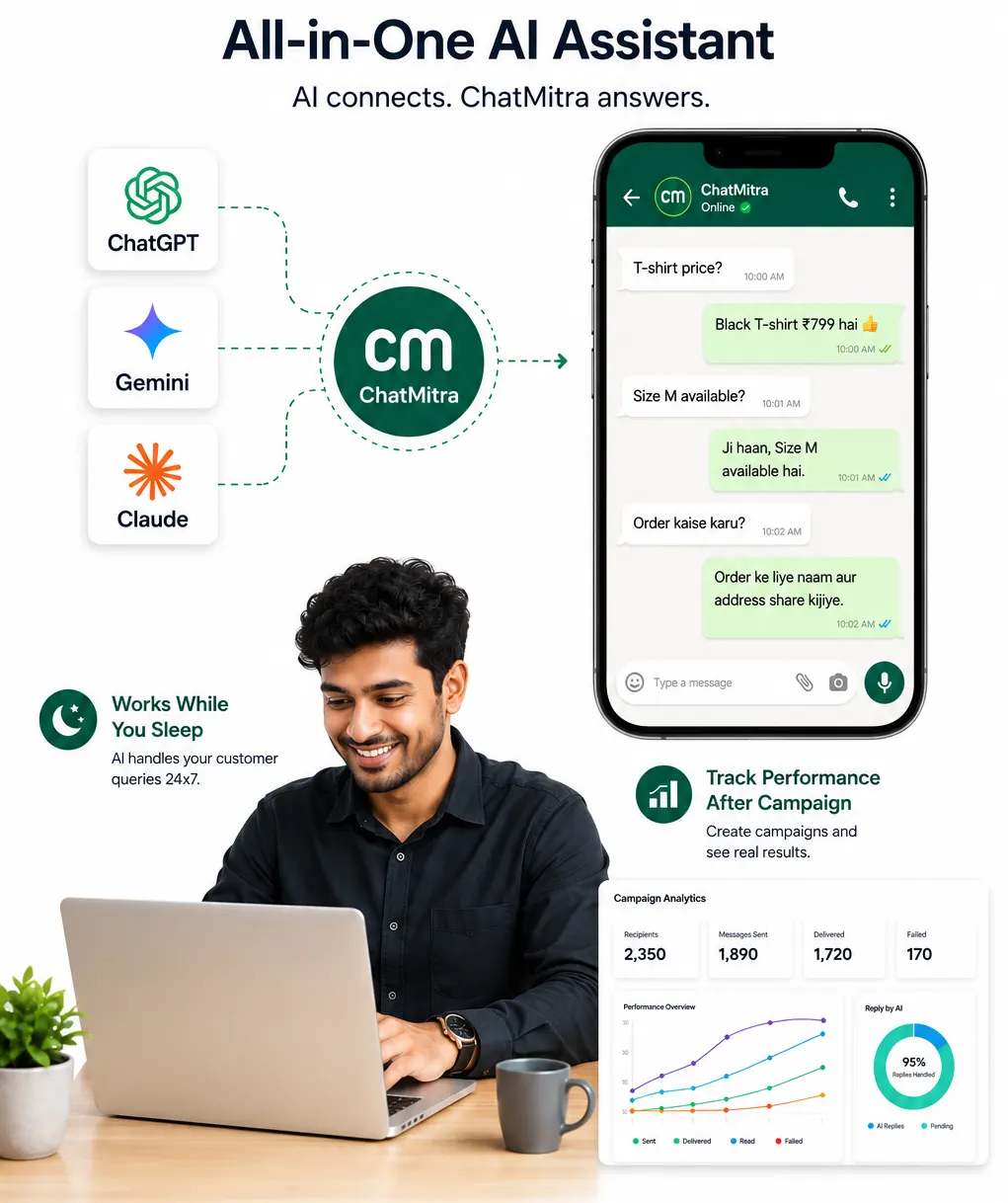
ChatMitra doesn't sell a self-serve white-label plan. Agencies can run several client businesses from one ChatMitra login, each as its own project with its own WhatsApp Business Account, and add team members with access to the projects they handle. Clients pay Meta directly for messages, and ChatMitra charges ₹0.20 per conversation, never per message. For a partnership or branded arrangement, write to [email protected]. See Where ChatMitra fits.
What white-label WhatsApp API actually means
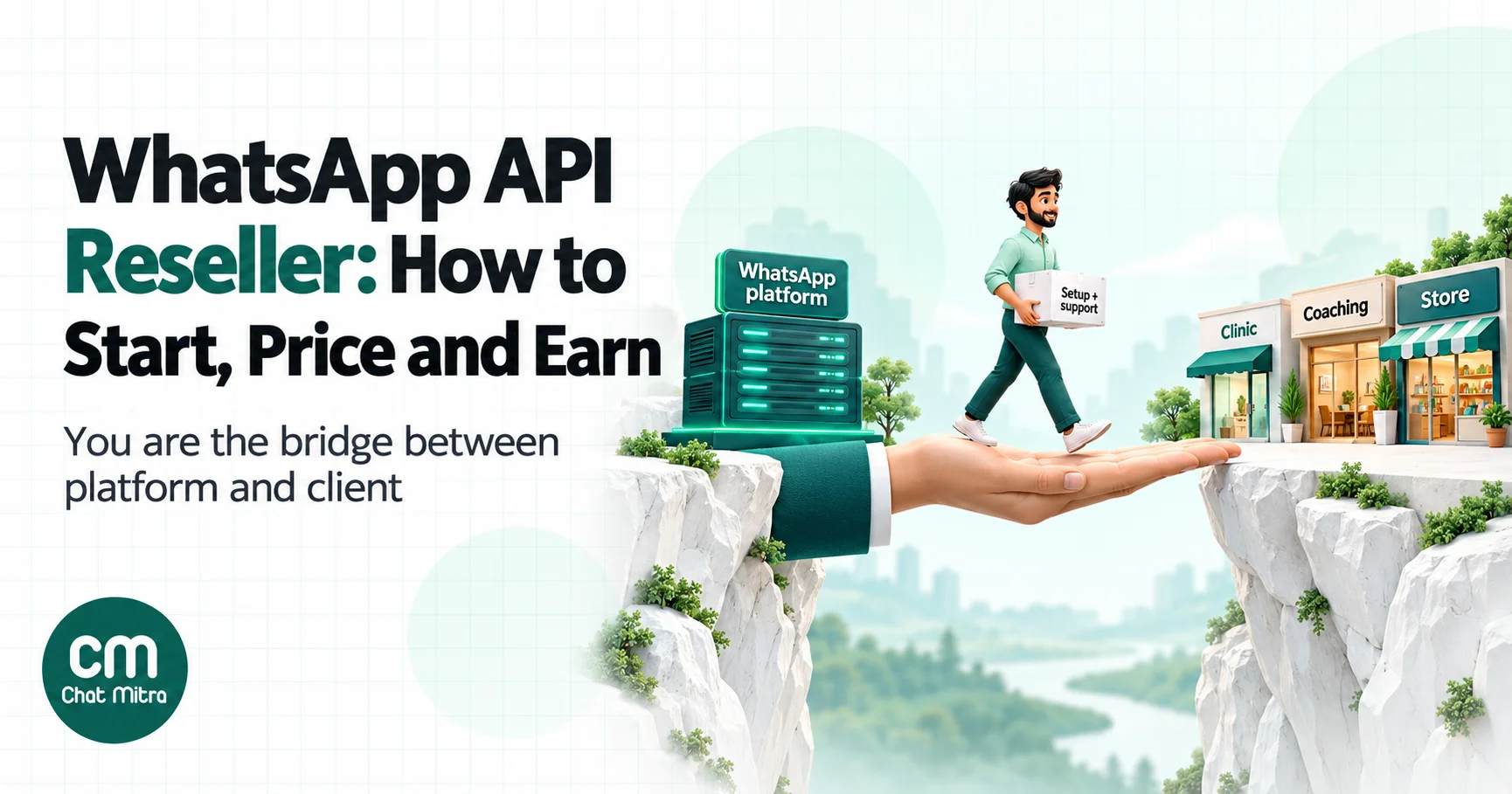
A white-label WhatsApp API is a commercial arrangement in which a company that has built a WhatsApp Business Platform product lets a partner sell it under the partner’s own brand. The partner’s clients log in to a dashboard with the partner’s name, logo and domain. They pay the partner. They call the partner for help. The company that built the software stays in the background.
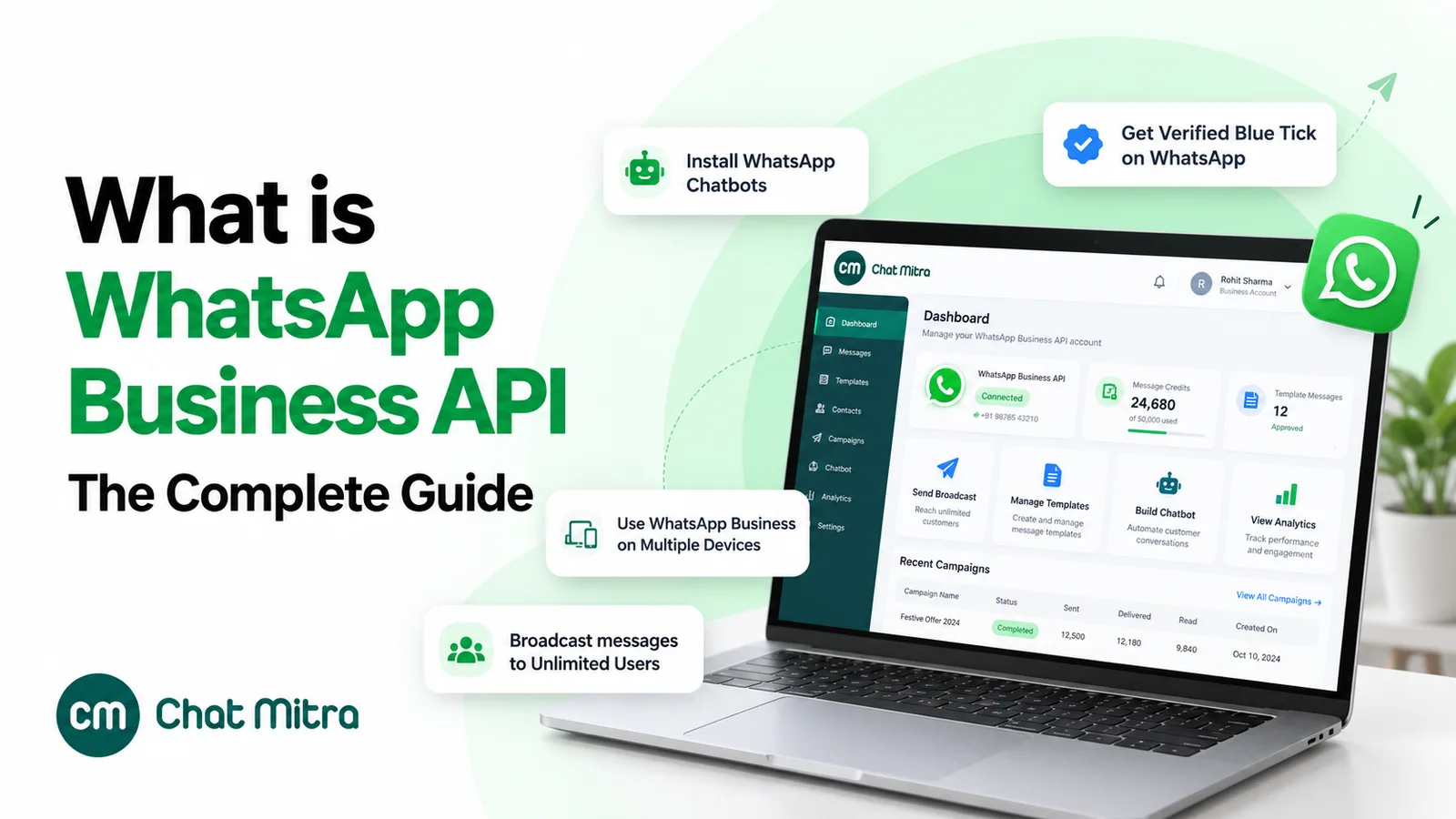
The word “API” in the phrase is a little misleading. Most white-label deals aren’t about the raw API at all. What partners rebrand is the platform on top of it: the team inbox, the broadcast tool, the chatbot builder, contact management, template management and reports. Very few agencies want to hand their clients an API endpoint; they want to hand them a product.
Meta’s own vocabulary helps here. Its WhatsApp Business Platform terms describe businesses that message customers “either directly or through a third party authorized to use these APIs on such business’ behalf”, and they call that third party a Solution Provider (Meta Terms for WhatsApp Business Platform, section 1.1). The same terms list among the client business’s restrictions that it must not “distribute, sell, resell, or rent the WhatsApp Business Platform to third parties” (section 4.1(c)).
Those two lines tell you something useful. A white-label arrangement isn’t a client business passing its WhatsApp access on to someone else. It’s a chain of service providers, with an authorised Meta partner somewhere in it, delivering WhatsApp to each client’s own account.
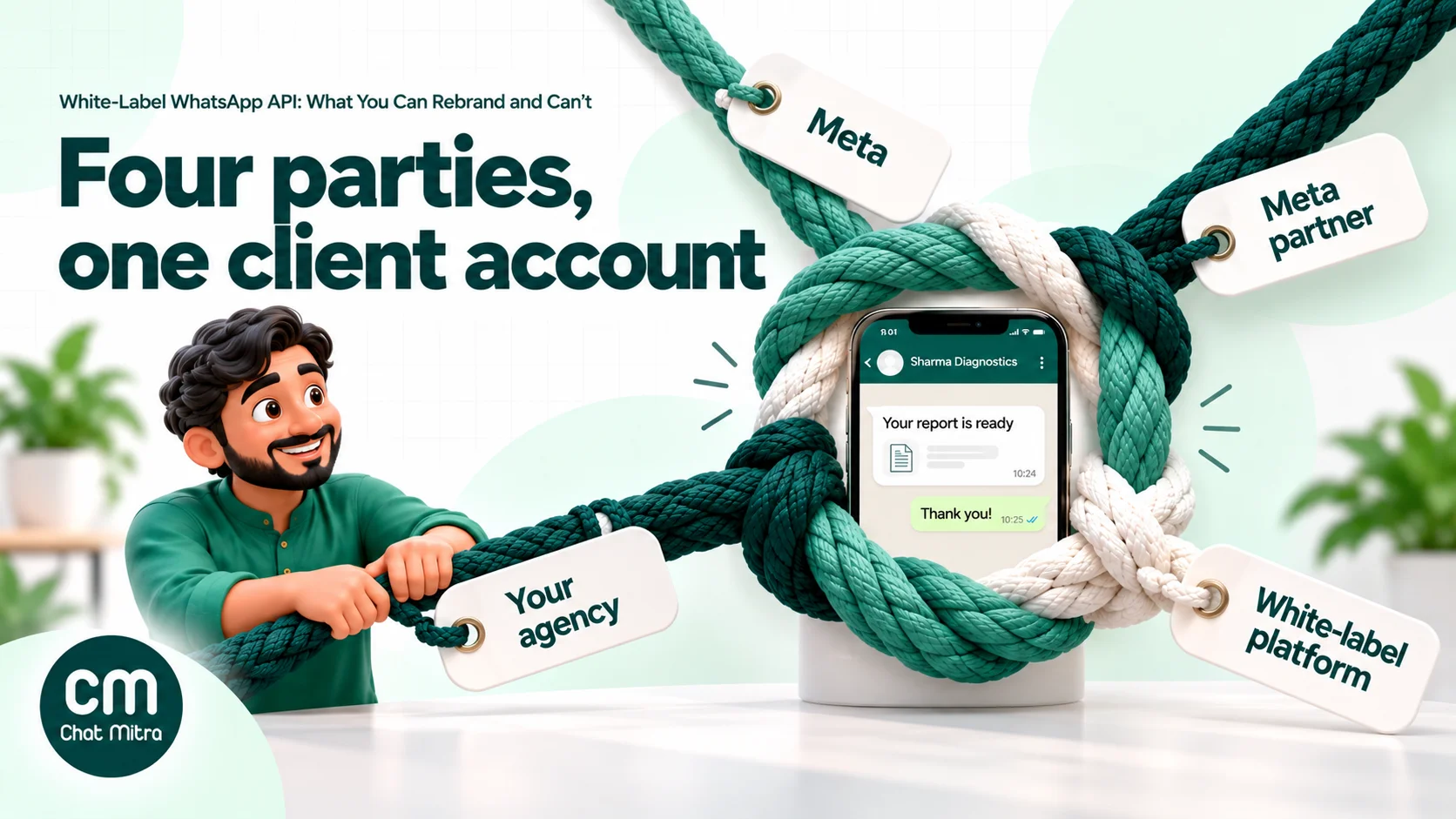
The four parties in every white-label setup
However a provider describes its offer, four parties sit in the chain:
- Meta runs WhatsApp, the WhatsApp Business Platform and the Cloud API. It approves display names and templates, enforces policy, sets message prices and bills for messages.
- A Meta partner has the official relationship with Meta that allows it to onboard businesses. This is either a Solution Partner or a Tech Provider (explained below). Often the white-label provider is this partner; sometimes it’s a separate company the provider works with.
- The white-label platform is the software: dashboard, inbox, automation, campaigns and APIs, plus the hosting and maintenance behind them.
- You, the partner, sell the platform under your brand, set prices, onboard clients and give first-line support. Your client is the business that actually messages its customers.
Solution Partners, Tech Providers and Tech Partners
Meta’s developer documentation splits its WhatsApp partners into three types (Meta for Developers: Solution Providers overview):
| Solution Partner | Tech Provider | Tech Partner | |
|---|---|---|---|
| What Meta says it is | A Meta Business Partner providing “a full range of WhatsApp Business Platform services” to client businesses | A partner that builds and onboards clients through its own app, without a credit line | A Tech Provider that is, or is eligible to become, a Meta Business Partner |
| Meta Business Partner | Yes | No | Yes |
| Credit line for clients | Yes, so clients don’t need their own payment method | No | No |
| Who pays Meta for messages | The partner can invoice clients directly | The client adds its own payment method; Meta bills the client | As for Tech Providers |
| How hard to become | Meta calls it “a lengthy process” | Business verification and App Review | Tech Provider plus Meta Business Partner status |
Meta’s advice is direct: if you don’t need a credit line and don’t need to invoice clients for API usage, consider becoming a Tech Provider instead of a Solution Partner.
Meta also lets partners combine their strengths. A multi-partner solution allows partners to jointly manage onboarded clients’ assets. A Tech Provider that can’t extend credit can set one up with a Solution Partner, and clients onboarded through that solution share the Solution Partner’s credit line (Meta for Developers: Multi-partner solutions). Many white-label offers are built this way, so ask which partner type sits behind yours. The answer decides who invoices your clients for messages.
What you can rebrand
This is the part white-label providers like to talk about, and it’s genuinely valuable. Depending on the provider and your contract, you can usually control:
- The dashboard’s identity: your logo, colours, product name and favicon, so clients never see the provider’s brand.
- The address: your own domain or subdomain for the login page, and sometimes your own sender address for system emails such as password resets.
- Packages and prices: which features each plan includes, what you charge for the platform, setup fees and service bundles.
- Client management: creating client accounts, assigning plans and seeing usage across your client base.
- Support and onboarding: your help documents, your onboarding calls, your support number and your service hours.
- Services around the software: template writing, chatbot design, campaign management, integrations and reporting, which is where many agencies earn more than they do on the licence.
Some providers also let you take payments through your own payment gateway. Others collect payment themselves and pay you a share. Both models exist, so check which one you’re getting before you design your billing.
What stays with Meta and with your client
Here is what many white-label pitches leave out. Some parts of a WhatsApp Business Platform account can’t be rebranded, hidden or owned by you, whatever your contract says, because Meta controls them.
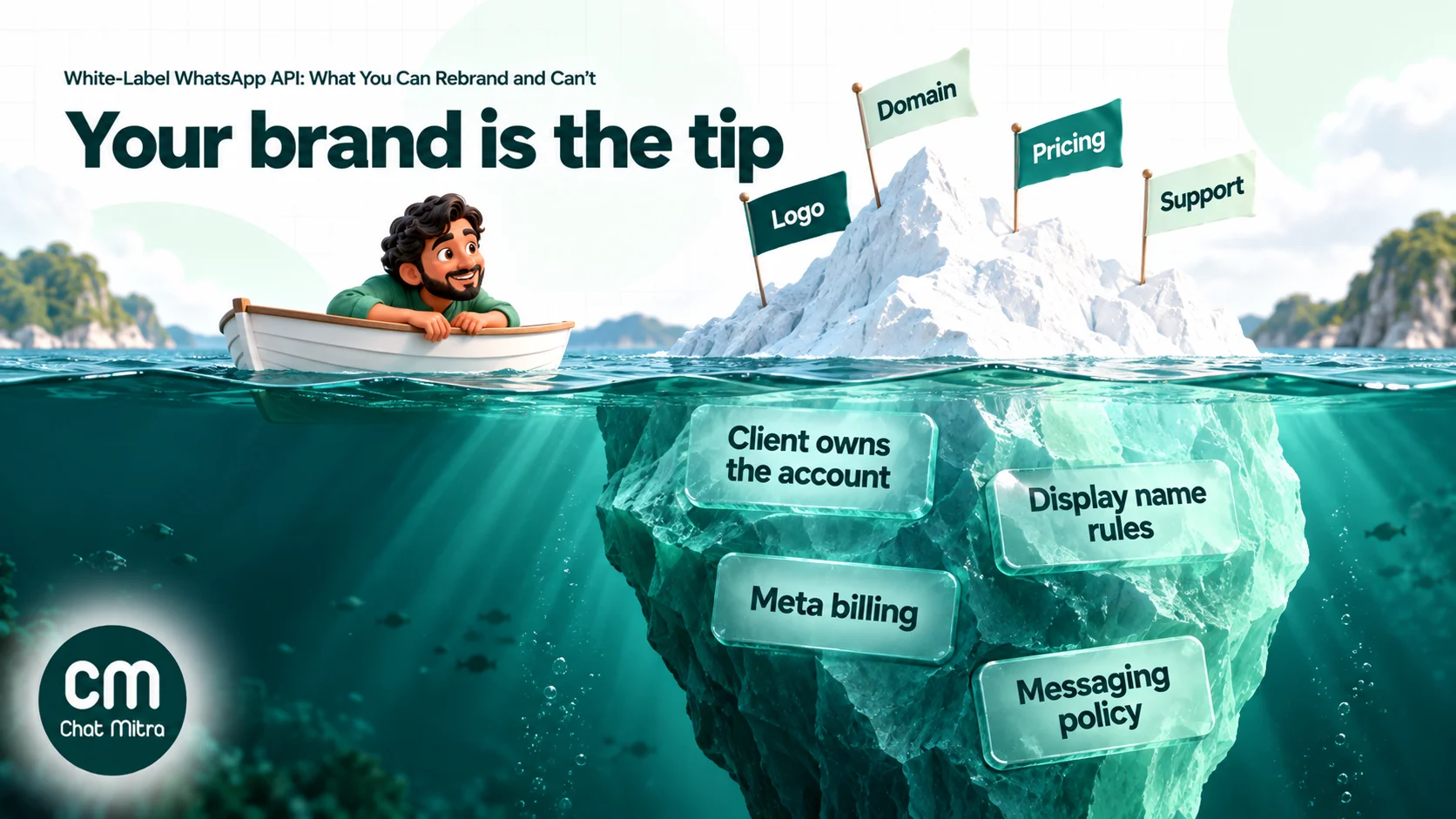
The client owns the WhatsApp account
When a business signs up through Meta’s Embedded Signup, the flow most platforms use, Meta’s documentation states that business customers “own all of their WhatsApp assets, which they can use with other Meta solutions”. They also have full access to WhatsApp Manager, and Meta adds that you “cannot restrict this access in any way” (Meta for Developers: Embedded Signup).
In practice that means your client can open WhatsApp Manager at any time and see its phone numbers, templates, quality rating and billing. It also means the client can leave you and take its WhatsApp account elsewhere, which is fair, and worth stating in your contract rather than discovering later.
Some agencies avoid this by creating client accounts inside their own business portfolio and sharing access with the client. That keeps control with the agency, but it ties the client’s number to your business. If the relationship ends badly, nobody benefits. Agree ownership in writing before onboarding.
The signup flow shows the partners’ names
During Embedded Signup the client logs in with Facebook or Meta credentials, picks or creates a business portfolio, and chooses the display name customers will see. For multi-partner solutions, Meta notes that both partners’ business portfolios “will appear throughout the Embedded Signup flow”. A white-label provider can put your logo on its dashboard, but the Meta-hosted signup screens show the business names Meta has on record. Prepare clients for that, so the name they see doesn’t look like a mistake.
The display name must be the client’s brand
Meta reviews every display name against its guidelines, which rest on three principles: policy compliance, accurate representation of the business, and a clear relationship with the business’s legal name and external branding (Meta Business Help Centre: Display name guidelines). The rule that matters most for white-label partners is this one: if a display name represents a business the company works with as an agency, distributor, partner or parent company, “the relationship between the business in the display name and the end-client business must be evident on the business website”.
So your client’s customers will see your client’s name, as they should. Don’t put your agency’s brand on a client number, don’t use generic names, and don’t add “Official” or “Verified”. Our guide to WhatsApp display names covers the approval rules in detail.
Meta bills for messages, one way or another
Since 1 July 2025, Meta has charged per message, and only for delivered messages (Meta for Developers: Pricing). Who receives Meta’s invoice depends on the partner behind your platform. With a Tech Provider, each client adds its own payment method and Meta bills the client directly. With a Solution Partner’s credit line, the partner pays Meta and invoices the client. Either way, the charge comes from Meta’s rate card, and Meta’s rates aren’t something you can rebrand away.
Policy, quality and templates are Meta’s call
Template approval, quality ratings, messaging limits, account restrictions and the WhatsApp Business Messaging Policy all apply to your client’s account exactly as they would without you. A white-label platform gives you a branded way to manage them. It doesn’t give you a way around them.
White-label vs reseller vs referral vs your own Tech Provider app
“Partner program” covers at least five different arrangements. They differ in who the client sees, who sends the invoice and how much work you take on.
| Referral or affiliate | Reseller | White-label partner | Tech Provider (your own app) | Solution Partner | |
|---|---|---|---|---|---|
| Brand the client sees | The provider’s | The provider’s | Yours | Yours | Yours |
| Who bills the client for the platform | The provider | Usually you, or the provider under your agreement | You | You | You |
| Who pays Meta for messages | The client, or the provider’s partner | Depends on the provider | Depends on the partner behind the platform | The client, directly | You, through your credit line, then you invoice |
| Who supports the client | The provider | Mostly you | You | You | You |
| Software you build | None | None | None | All of it | All of it |
| Meta process for you | None | None | None | Business verification, App Review | Meta’s Solution Partner process |
| How you earn | Commission | Margin on the provider’s price | Your price minus the licence and costs | Your own pricing | Your own pricing, including usage |
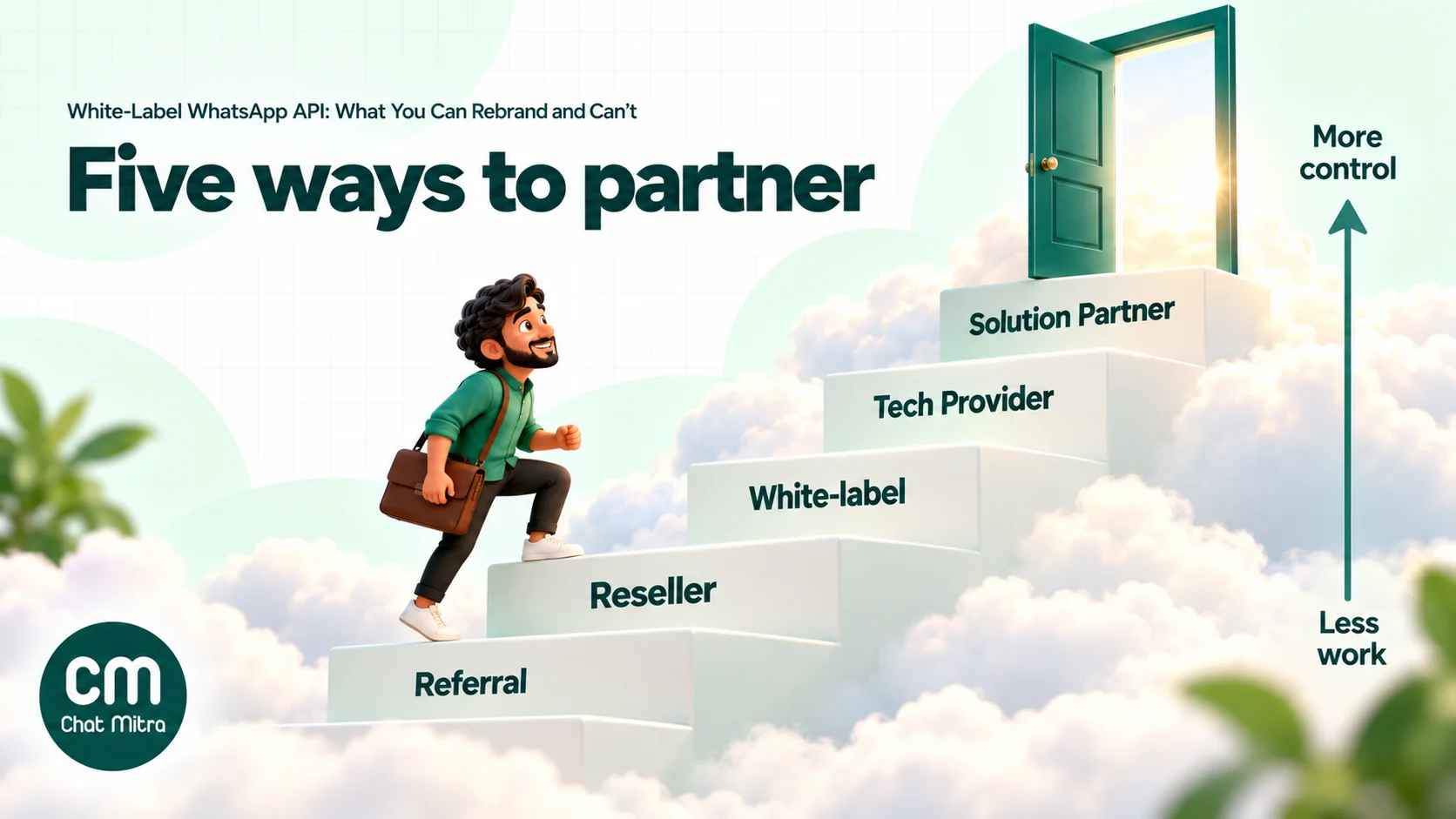
The steps aren’t a ladder everyone must climb. Plenty of agencies earn well at the reseller step for years. If you want to earn from introductions without supporting anyone, our guide to WhatsApp API affiliate programs explains how commissions work. If you want to sell another company’s platform and keep a margin, the WhatsApp API reseller guide covers the costs, pricing and contracts.
How the money works
A white-label offer has four cost lines and one revenue line. Write them down for a typical client before you agree a licence fee.
| Line | Who sets it | What to check |
|---|---|---|
| Meta message charges | Meta’s rate card, by category and the customer’s country | Who Meta invoices: your client directly, or the partner through a credit line |
| White-label licence | The provider | Flat monthly fee, per client account, per user or a share of revenue; minimum commitments |
| Per-conversation or usage fees | The provider, if any | Whether the provider adds its own fee on top of Meta’s charges, and how it’s measured |
| Your team’s time | You | Onboarding hours per client, template work, support load and campaign services |
| Your price to the client | You | Platform fee, setup fee and service retainers, minus everything above |
Three habits keep this healthy:
- Keep Meta’s charges visible. Clients can see their own billing in WhatsApp Manager, and many will compare it with your invoice. Charge clearly for your platform and your services rather than hiding a markup inside message costs.
- Price services, not just software. A licence margin is thin and easy to undercut. Template writing, chatbot flows, campaign management and reporting are where an agency’s knowledge is worth paying for.
- Model a slow month. Licence fees often arrive every month whether or not a client is active. Work out what happens when two clients pause.
For Meta’s current rates by message category, use the WhatsApp pricing calculator or read our explainer on WhatsApp business cost per message.
Build your own platform or white-label one?
Some agencies and software companies ask a bigger question: why not build our own platform and become a Tech Provider? It’s possible, and for companies whose main product is messaging, it’s often right. But be clear about what “build” includes.
To become a Tech Provider, Meta requires you to verify your business, then pass App Review for advanced access to two permissions: whatsapp_business_messaging, to send messages on behalf of clients, and whatsapp_business_management, to access clients’ WhatsApp accounts (Meta for Developers: Get started for Tech Providers). You onboard clients through Embedded Signup, and by default you can onboard 10 new business customers in a rolling seven-day window. That rises to 200 once you complete business verification, App Review and Access Verification (Meta for Developers: Embedded Signup).
Then comes the product itself: webhooks that never miss a message, a team inbox, template creation and sync, broadcast sending with retries, opt-out handling, automation, analytics, billing, security, and support at 2 a.m. when a client’s campaign fails. You also have to keep up with Meta’s changes. For example, Meta set 15 October 2026 as the deprecation date for Embedded Signup versions 2 and 3, so every partner still using them had to move to the newer version.
| Question | Build your own (Tech Provider) | White-label |
|---|---|---|
| Time to first paying client | Months: Meta approvals plus building the product | Days to weeks, once the contract is signed |
| Up-front cost | Engineering team, hosting, security work | Setup fee and licence, if any |
| Control over features | Complete | Limited to the provider’s roadmap |
| Meta relationship | Yours | The provider’s or its partner’s |
| Who fixes outages | You | The provider, while you handle client communication |
| Risk if the provider changes terms | None from a provider | Real: plan for migration |
| Best for | Companies whose main product is messaging | Agencies and software companies adding WhatsApp to what they already sell |
A useful test: if WhatsApp messaging would be most of your revenue in three years, consider building. If it would be one service among several, white-label it and spend your engineering effort on what makes your business different.
Who white-label suits, and who it doesn’t
White-label tends to work well for:
- Digital marketing agencies that already run ads, social media and campaigns for clients and want WhatsApp in the same retainer. Click-to-WhatsApp ads feed straight into the conversations they manage.
- CRM, ERP and vertical software companies whose customers keep asking for WhatsApp inside the product they already pay for. A clinic management system, a school ERP or a real estate CRM is in a better position to sell WhatsApp to its customers than a general platform is.
- Telecom and SMS resellers whose clients are shifting from SMS to WhatsApp and who already have the sales team, billing and support desk.
- Consultants and system integrators who implement WhatsApp journeys and want a platform they can stand behind under their own name.
It suits these businesses less well:
- A single business that wants WhatsApp for itself. It needs a WhatsApp platform, not a white-label licence. Start with our guide on how to get the WhatsApp API.
- An agency with one or two WhatsApp clients. The licence and setup work rarely pay off yet. A referral or reseller arrangement earns from the same clients with far less commitment.
- Anyone without support capacity. Under your brand, every failed template and every banned number is your problem. If nobody on your team can answer a client’s message the same day, wait.
How to vet a white-label WhatsApp provider
Ask every provider these questions in writing. Vague answers to the first four are reasons to walk away.
- Is it the official WhatsApp Business Platform? Some products sold as “white-label WhatsApp” connect by scanning a QR code with a phone, which automates the WhatsApp app instead of using Meta’s Business Platform and Cloud API. Ask how client accounts are onboarded. You want to hear “Embedded Signup”.
- Which Meta partner is behind the platform? Is the provider a Solution Partner, a Tech Provider or Tech Partner, or does it work with one through a multi-partner solution? Ask for the business name that appears in the signup flow.
- Who owns client accounts? Confirm that clients’ WhatsApp Business Accounts sit in the client’s own business portfolio, or get a written explanation of why they don’t.
- How do clients leave? Ask how a number is migrated to another provider, how long it takes and what data (contacts, chat history, templates) is exported. Meta’s migration process keeps a number’s display name, quality rating, messaging limit, Official Business Account status and high-quality approved templates (Meta for Developers: Migrating phone numbers via Embedded Signup), but chat history held in the provider’s platform is a separate question.
- Who pays Meta for messages? Clients’ own payment methods, or the partner’s credit line? If it’s a credit line, how are you invoiced and when?
- Does the provider add a fee on top of Meta’s message charges? Get it as a number per message or per conversation, not as “competitive rates”.
- What exactly can you brand? Domain, logo, colours, emails, mobile app, help documents, invoices. Ask to see a live partner dashboard.
- How are prices and plans controlled? Can you create your own packages and limits per client, or only resell fixed plans?
- What does the client get through the API? Agencies with technical clients need API keys and webhooks per client account.
- Who handles data, and under what agreement? In India, the Digital Personal Data Protection Act separates a Data Fiduciary, who decides the purpose and means of processing, from a Data Processor, who processes personal data on its behalf (sections 2(i) and 2(k)). Your client, you and the provider need a written agreement on who is which and what the provider may do with message data.
- What are the support terms? Response times, escalation to Meta, and status communication during outages.
- What happens if the provider ends the contract? Notice period, data export and help moving clients.
Mistakes white-label partners make
Calling yourself a Meta Business Partner when you aren’t one. Meta’s own table lists who is a Meta Business Partner. Selling a white-labelled platform doesn’t make you one, and claiming the title in sales decks misleads clients.
Putting your agency’s name on client numbers. Display names must reflect the client’s business. A rejected or misleading display name hurts the client first and your reputation second.
Hiding Meta’s charges. Clients can see their own WhatsApp billing. A markup buried in “message costs” gets found, usually at renewal time.
Keeping client accounts in your own portfolio without saying so. It feels like protection, but it turns every client exit into a dispute.
Promising things Meta decides. Template approval, the green tick of an Official Business Account and higher messaging limits are Meta’s decisions. Promise the work you’ll do, not the outcome.
Selling before your support is ready. The first month of each client brings template rejections, opt-in questions and a broadcast that didn’t go out. Have the answers, and the people, before you sign the tenth client.
Setting up a white-label WhatsApp offer: eight steps
- Pick your niche. “WhatsApp for everyone” competes with every platform. “WhatsApp for diagnostic labs” or “WhatsApp for D2C fashion brands” lets you build templates, flows and case material that sell themselves.
- Shortlist two or three providers and put the vetting questions above to each in writing.
- Run a pilot account under your brand before signing a long contract. Onboard a friendly client and run real templates and broadcasts.
- Write the client agreement. Cover account ownership, data roles, Meta’s charges, your fees, support hours and exit terms.
- Build your packages. Combine platform access with services such as template setup, a starter chatbot and monthly campaign management.
- Prepare onboarding material. Explain business verification, display names and the Meta signup screens so clients aren’t surprised.
- Set up support. Decide who answers, how fast, and when you escalate to the provider.
- Review margins every quarter. Licence costs, Meta’s rate changes and the time your team spends per client all move.
Where ChatMitra fits
ChatMitra is a WhatsApp Business API platform for businesses in India and elsewhere. It doesn’t sell a self-serve white-label or reseller plan, and this guide won’t pretend otherwise. What it offers agencies and consultants today:
| What you need | What ChatMitra does |
|---|---|
| Manage several clients | One login can run several projects, each with its own WhatsApp Business Account |
| Give staff access | Add team members and choose which projects each one can work in |
| Connect a client’s number | Meta’s Embedded Signup, or manual connection by WABA ID for accounts that already exist |
| Keep Meta billing clean | Each client adds its own payment method in Meta, and Meta bills the client directly for messages |
| Predictable platform cost | A plan fee plus ₹0.20 per conversation, charged once per customer per 24 hours, never per message |
| Earn from introductions | Invite & Earn pays a share of a referred business’s first qualifying payment as ChatMitra wallet credit |
| Something bigger | Partnership and branded arrangements are discussed directly: write to [email protected] |
If you’re an agency starting out, a practical route is to run your first few clients on ChatMitra projects under their own brands, price your services on top, and talk to the ChatMitra team once you have enough clients to need your own brand on the dashboard. Compare plans on the pricing page, or contact the team.
A short checklist before you sign
- You know which Meta partner type sits behind the platform, and whose names appear in the signup flow.
- Clients’ WhatsApp accounts will sit in their own business portfolios, or the exception is in writing.
- You know who pays Meta for messages, and any provider fee on top is stated as a number.
- The contract covers data roles, support terms and number migration.
- Display names will carry clients’ brands, not yours.
- Your price covers the licence, your team’s time and a slow month.
- Someone on your team can answer a client the same day.
White-label is a branding and business-model decision, not a technical shortcut. Get the ownership, billing and naming right at the start, and your brand gets the credit for a service your clients rely on.
Sources
- Meta: Meta Terms for WhatsApp Business Platform (last modified 23 September 2026), sections 1.1 and 4.1.
- Meta for Developers: Solution Providers overview, Get started for Tech Providers, Multi-partner solutions, Embedded Signup, Migrating phone numbers via Embedded Signup and Pricing.
- Meta Business Help Centre: Display name guidelines for the WhatsApp Business Platform.
- Government of India: Digital Personal Data Protection Act, 2023, sections 2(i) and 2(k).
- All sources read on 23 October 2026.