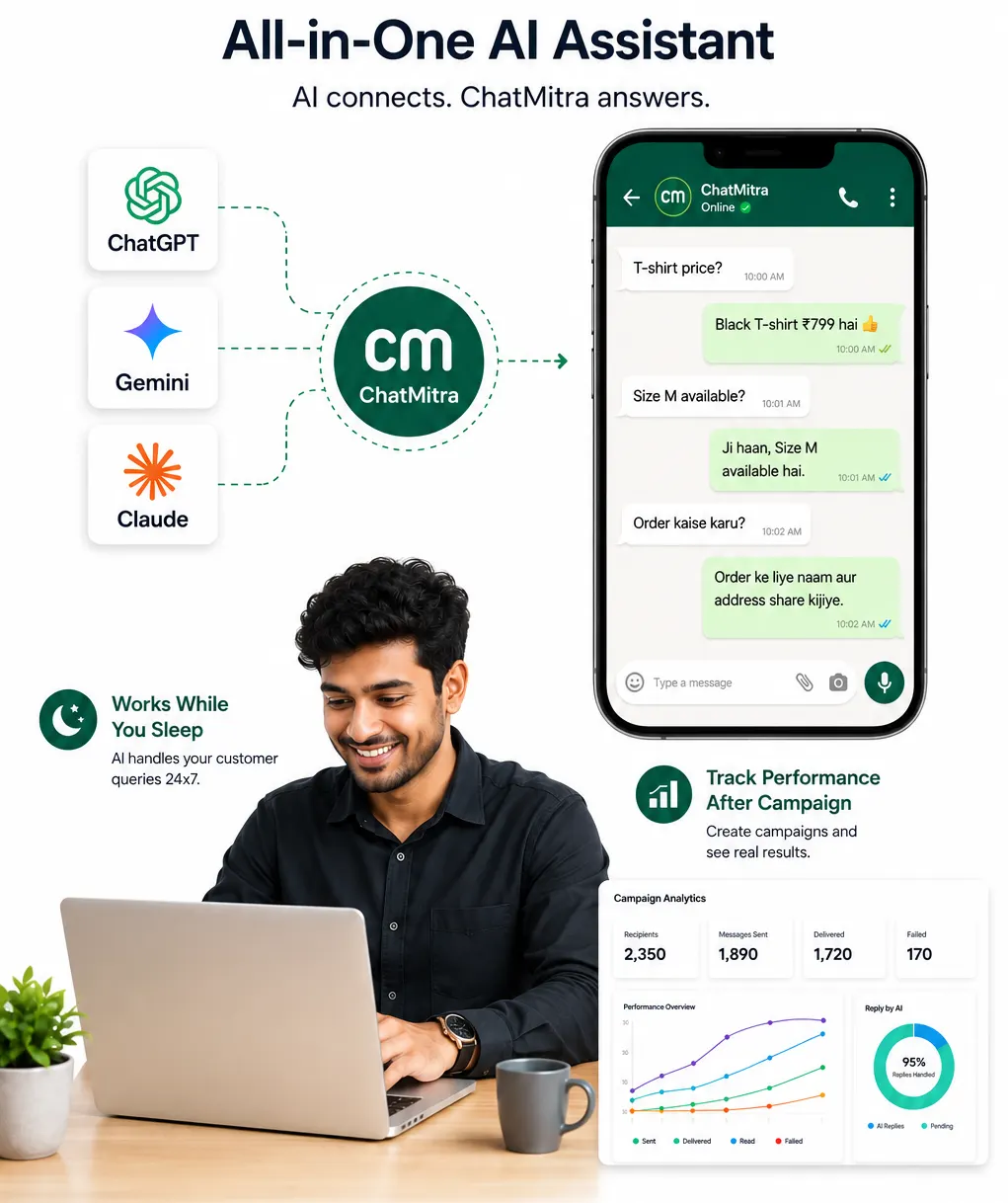
For a long time, businesses had to choose: the easy WhatsApp Business app, or the powerful API. Coexistence lets you have both on one number.
What coexistence means
Coexistence (you may also see it written as Coex) is using the WhatsApp Business app and the WhatsApp Business API on the same phone number, at the same time.
Normally, a number is tied to one or the other. With coexistence, your team can keep replying in the familiar app interface, while automated tools connect through the API behind the scenes — all on a single number customers already know.
Example: a boutique keeps answering customer chats in the Business app on a staff phone, while an API-connected tool sends order updates automatically — same number, no conflict.
Why use coexistence
The big win is that you don’t have to give anything up. You add automation and the power of the API without taking the WhatsApp Business app away from the people who already rely on it.
Key benefits
- Keep the app you know. Staff carry on chatting exactly as before.
- Add automation. Send order confirmations, reminders, and bulk template messages through the API.
- One number, one brand. Customers see a single, consistent contact.
This is a big relief for small teams that grew up on the app and don’t want to abandon it just to add automation.
How it works
Behind the scenes, your one number is connected to both the app and the API at once.
Communication
Customers message your number as usual. Your team can answer manually in the app, and your automated tools can send and reply through the API — both on the same conversation thread.
Pricing
Coexistence isn’t a separate product with separate pricing. You need a ChatMitra account with an active subscription plan, and normal per-message charges apply just like any other API messaging. For India, that’s ₹0.86 per marketing message, ₹0.11 per utility message, and ₹0.11 per authentication message.
Linked devices
Coexistence uses WhatsApp’s linked-devices feature to keep the app and the API connected to the same number. Keep the device with the Business app set up and signed in so the link stays healthy.
Limitations
Coexistence is powerful, but it isn’t magic. Keep these in mind:
- Feature gaps. Not every API feature behaves identically while the app is also active.
- Scale ceiling. For very high message volumes, a full API setup is still the stronger choice.
- Setup conditions. Some accounts (especially direct clients) may need extra setup before history sync works.
Chat history
Your existing chat history can sync from the app over to the platform, but there are rules you must follow to keep it working:
- Don’t uninstall the WhatsApp Business app. Removing it breaks the link.
- Open the app at least once every 13 days. This keeps the number “active”. Let it sit unopened too long and the connection can drop.
Heads up: for direct clients, chat-history sync may need a bit of extra setup. It’s worth checking with support before you onboard so nothing surprises you.
FAQ
A few common questions come up about coexistence:
- Who’s eligible? Most businesses already using the WhatsApp Business app on a number can move to coexistence.
- Can I switch back? Yes — you can return to app-only or move fully to the API later.
- Can I use more than one number? Yes, you can activate coexistence on multiple numbers.
- Does it support verification badges? Coexistence accounts apply for Meta Verified rather than the Official Business Account (green tick).
Getting started
To begin, you’ll need a ChatMitra account and an active plan. From there, the onboarding flow walks you through connecting your existing WhatsApp Business app number into coexistence mode — your history and contacts come along, and your team keeps working in the app.
Who it’s for
Coexistence fits best when you’re already on the WhatsApp Business app and want to add automation without a scary, all-at-once switch.
Good fits:
- A small shop with one or two people answering chats.
- A growing business testing automation before committing fully.
- Teams nervous that moving to the API means losing the simple app they like.
Example: a tuition centre in India keeps fee reminders manual in the app at first, then gradually shifts them to automated API templates as confidence grows — coexistence makes that transition smooth instead of sudden.